
Braids to Bags: How Janet is Fighting Plastic Pollution and Unemployment
A young entrepreneur from Nairobi transforms synthetic hair waste into sustainable products while empowering women in her community.

In Mathare, one of Nairobi’s largest informal settlements, Janet Dete saw an opportunity where others saw waste. She began collecting synthetic hair discarded by salons – a material made of microplastics and rarely recycled – and transformed it into a sustainable, handmade business that empowers women in her community.
After finishing high school, Janet faced a difficult period marked by depression and long-term unemployment. A candid moment between friends sparked a new idea. "We were so broke we'd braid our hair and then unravel it after a few weeks, giving it to another friend to use,” she recalls. That moment made her realize the untapped potential of synthetic braiding hair, which often ends up in landfills and waterways, contributing to urban pollution across Kenya.
At 24 years old, Janet decided to co-found Queening Afrika, a social enterprise that converts discarded synthetic wigs into affordable, handwoven bags, mats, and accessories. Her business addresses two pressing issues: plastic waste and youth unemployment.



Getting started wasn’t easy. Queening Afrika was operating at a small scale, producing only basic products due to lack of funds and access to labour. That’s when Janet joined the BeGreen Africa entrepreneurship programme, co-created by the IKEA Foundation, Tony Elumelu Foundation and UNICEF – Generation Unlimited which operates across Kenya, Nigeria, Senegal, and South Africa. The programme offers mentorship, training in green and business skills, and startup funding to help young Africans build climate-smart, community-driven enterprises.
“I learned how to manage a business, market my products, and lead my team. I didn’t have access to these skills before,” Janet shares. With the skills and funding support she received through BeGreen, Janet was able to hire more artisans, launch larger bag designs to meet demand, and start working with more local retailers.

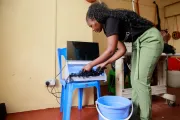
Today, Janet’s team collects up to 250 kg of synthetic braid waste per cycle from 15 partner salons in Nairobi. Using a fully manual process rooted in traditional Kenyan weaving practices, the hair is sorted, cleaned, dyed, and woven by hand into bags and mats.
She currently works with 17 part-time artisans, including elderly women whose generational knowledge is central to the production process. The techniques they use date back to the 1960s and have been revived in a modern, sustainable context. Beyond production, Queening Afrika also promotes environmental education and local climate action. To date, the business has recycled more than 4,000 kg of synthetic hair, reducing plastic waste and creating impact within the community.
In recognition of her leadership, Janet was named one of Kenya’s most influential women in 2024 by a national survey conducted by Timely Kenya. Looking ahead, she hopes to expand Queening Afrika to rural areas, engage more young people and women, and reach tourist and international markets.
Her advice to other young entrepreneurs who want to start a business, especially in green sectors, is: “Fall in love with the problem, not the solution.” Janet believes that staying committed to the issue you're trying to solve is what keeps innovation alive, even when the path forward is uncertain.
*UNICEF does not endorse any company, brand, product or service.