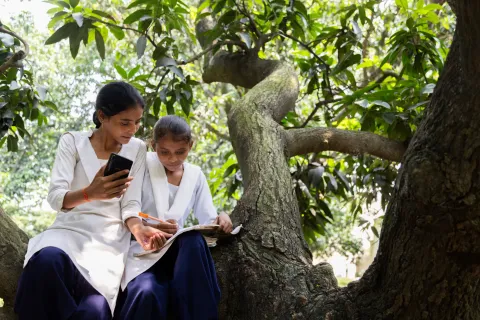

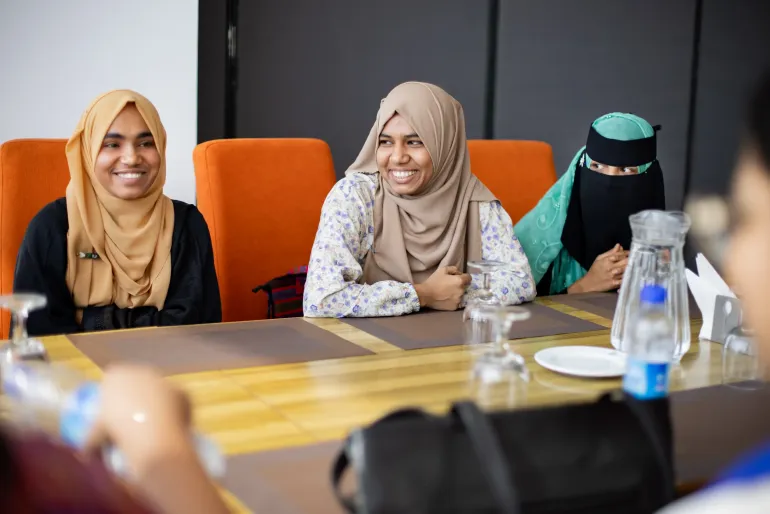
"I have long dreamed of standing on my own feet. I want to make my father and mother happy (…) and I have a younger brother, so I can educate him too." Sumaiya*, Food & Beverage trainee, Cox's Bazar
For thousands of adolescent girls and young women in Bangladesh, enrolling in a skills programme is far more than simply signing up for a course. It involves a family conversation, a leap of faith, and often forms a first step toward changing not only their future, but that of their entire household.
In a country where more than half of girls are married before their 18th birthday, skills training can open pathways to livelihoods, strengthen confidence and agency, and expand future opportunities. The case for this has never been stronger: Bangladesh's working-age population is at its peak and turning that into economic growth depends on young people having the right skills. Young women are furthest from that opportunity, with 61 per cent not in education, employment or training, compared with 40 per cent of young people overall.
The Girls’ Education and Skills Partnership (GESP) is a collaborative initiative led by Generation Unlimited (GenU), UNICEF and the UK Foreign, Commonwealth and Development Office, along with global businesses to advance learning to earning opportunities for adolescent girls and young women through a range of girl-centred market-relevant interventions. In Bangladesh, the programme is implemented by the JAAGO Foundation and Save the Children. Since its inception, nearly 20,000 participants have enrolled in the programme across three districts: Bandarban, Cox’s Bazar and Kishoreganj.
How do adolescent girls and young women make the decision to take the journey?
To answer this question, UNICEF and programme implementing partners surveyed more than 3,500 registrants for the livelihood-focused component of the programme in the first half of 2026 and spoke in depth with 61 learners and their families. Their responses reveal what motivated participation and shaped the decision to enrol.
Trust comes first
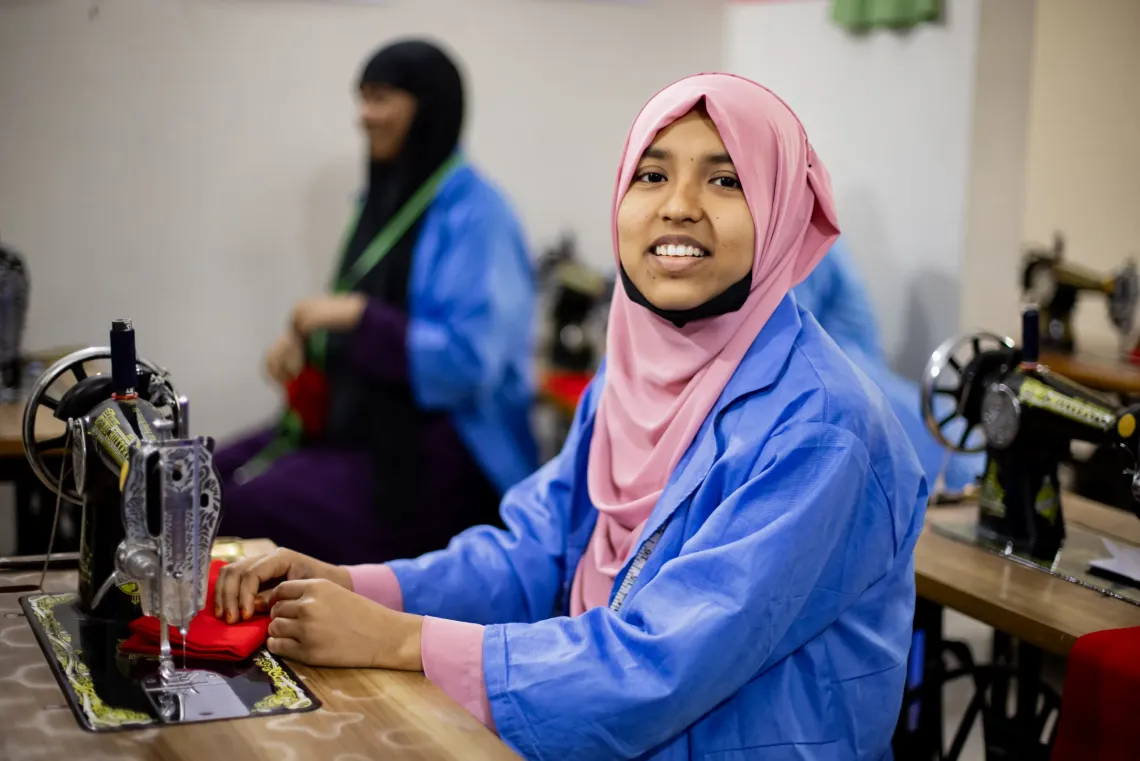
Most learners are young, unmarried, and still finding their footing. The average age at enrolment is 19. Most had not completed secondary education, and nearly all were not employed and actively looking for work when they enrolled. GESP is reaching girls at a genuine turning point: searching for options for their futures, not yet locked into a clear path.
In the programme’s third year, most learners heard about the training opportunity through informal, community‑based channels such as friends, relatives, or neighbours – often someone who had already completed the course and could vouch for it. Trust was the decisive ingredient: in the programme, the information source, and the training’s potential benefits. Where programme staff reached learners directly, outreach worked best when the representative was already known and trusted.
Bringing the family along
For many of these girls, enrolling is not a small decision. It can mean leaving the house regularly for the first time and becoming visible in a community that may ask why a girl is out learning a trade, and what that means for her marriage prospects. Getting there takes more than an individual's willingness.
Behind most enrolment decisions was a family who said “yes”. Over half of participants (56%) made the decision to enrol together with their parents. Typically, a learner first told a trusted household member – most often their mother – who acted as advocates and intermediaries, helping to build support among other family members. Fathers were commonly seen as the primary decision-maker and usually gave the final approval. They rarely expressed outright resistance, though many weighed concerns about safety and transport, putting in place specific safeguards (escorted travel, fixed return time, proximity to home) as conditions for their approval.
"I brought my daughter for the first few days, and I saw that there was no problem here, it was quite safe. Later, my daughter would come alone or with her friend." Fazlul, father of trainee, Bandarban
Marriage and parenthood shift this picture. Among ever-married learners, close to half were influenced by their husbands/in-laws to make their enrolment decision; several said they would not have been able to enrol without their husbands’ approval. Those without children, expressed greater autonomy, with a notable share making the decision alone (41%, compared to 23% among unmarried learners and 34% among married learners with children). For married learners with children – most had children aged 5 or younger – the challenge often shifted from obtaining permission to managing practical care responsibilities. Support from mothers and mothers-in-law to provide childcare was sometimes critical.
Where social norms-based resistance did emerge, it tended to come from extended family or community members holding more traditional views, not from immediate family members. Community attitudes toward working women remain mixed. Many families navigated gossip, questions about her marriage prospects, or suspicions about her intentions and said yes despite these pressures.
Family support, then, was as much about the practical work of enabling enrolment – arranging escorts to address safety concerns, providing childcare, navigating community norms – as it was about giving permission. And mothers were at the heart of that work. They were the first person a girl told, they made the case to her father or decided themselves in his absence, and in some cases, they looked after a grandchild so their daughter could attend. Many were driven by something personal: they wanted for their daughters what they had not had themselves.
"My daughter was telling me: 'Mom, I am sitting at home, there is a training going on here, should I go?' I said: 'Go, if there is no problem.' My husband thought about it at first, but now there is no problem." Aleya, mother of Computer Operations trainee, Bandarban
Aspirations beyond the individual
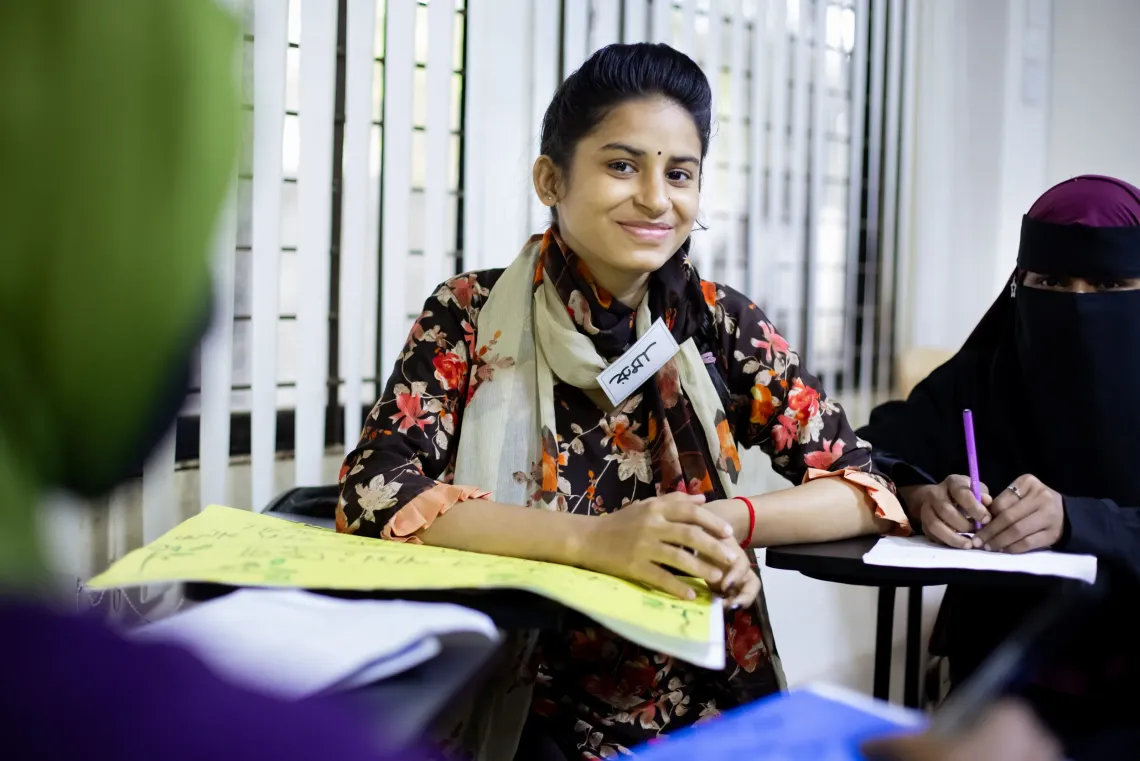
The family decision-making and support that shaped the decision to enrol carried through to their reason for enrolling. Learners’ own ambitions were rarely about independence for its own sake: only 5% cited personal independence as their motivation. Earning money for the family was the prevailing driver (47%), followed by learning new skills (38%). Married learners were more likely to be drawn to learning new skills and home-based work after training. Unmarried learners, who form a large majority of the cohort, were more driven by contributing to household income and wage employment. Some described a sequential vision: job first, build savings, then start a business.
Parents’ hopes echoed their daughters’: mothers wished for skilled daughters who would not have to depend on in-laws; fathers hoped for stable jobs and improved family standing. Across the board, expectations centred on employment, with many learners drawn by employment assistance offered by the programme.
What comes next?
What emerges from the first phase of this study is less a story of individual aspirations than one of a shared undertaking – a decision made by girls with their families, with hopes riding on it for the whole household.
Whether these aspirations are realised is the open question. To find out, a tracer study is following this cohort through and beyond the programme, tracking their journeys at one, three and six months after training completion.
The second instalment of this series, coming in November, will look at where these journeys lead.
*All names have been changed