

What We Do
GenU accelerates young people’s transition to livelihoods through skilling, employment, and entrepreneurship, with a focus on systems-level action for scale and sustainability.
Jump to: Impact | Global Solutions | Where we work |
Accelerator Countries | Thought Leadership
Talent is everywhere. Opportunity is not.
UNICEF’s Generation Unlimited (GenU) works to turn a generation at risk into a generation of opportunity.
As a Public-Private-Youth Partnership, GenU brings together young people, governments, businesses and civil society to expand pathways from skilling to livelihoods. It connects fragmented efforts, addresses delivery barriers and helps embed solutions in national systems so more young people can access opportunities at scale.
Young people are central to this work as co-creators, decision-makers and partners in shaping better futures.
Core programming impact: Skills & livelihoods
GenU supports young people to build skills, gain experience and access opportunities for employment, entrepreneurship and livelihoods through market-driven pathways that support successful learning-to-livelihoods transitions.
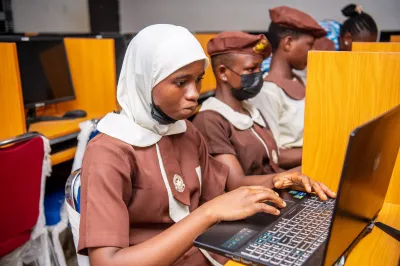
Skills development
Market-relevant technical and transferable skills delivered through high-quality training programmes.

Internships and apprenticeships
Paid work-based learning opportunities that provide real-world experience for smoother learning-to-earning transitions.
Job matching and placement
Matching youth with potential employers, often coupled with career guidance and counseling.
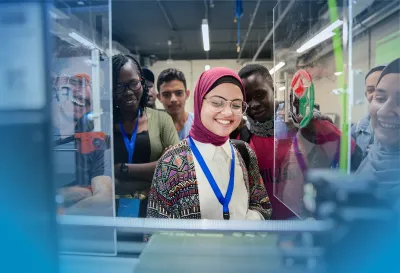
Entrepreneurship and incubation
Business development support, mentorship and access to finance and seed funding to launch and grow and youth-led business.
Systems-level impact: Scale & sustainability
GenU strengthens the policies, institutions, partnerships and financing mechanisms that enable countries to expand and sustain quality skills and livelihood opportunities for young people at scale.
Policy and regulatory reform
Advocacy and technical support for enabling legislation and policies that drive youth skills and livelihoods in line with labour-market needs.
Digital innovation and transformation
Support for scaling innovative digital solutions for skilling and livelihood pathways through government-private sector partnerships.
Institutional capacity-building and ecoysystem coordination
Strengthening national institutions and public-private ecosystems for skills development and employment pathways.
Sustainable financing
Unlocking domestic, multilateral development bank and innovative financing models to scale youth skilling and livelihood opportunities.
Generation Unlimited Global Solutions
Accelerator countries
Accelerator Countries
Anchored in its mission to connect young people to meaningful opportunities, the focus of GenU in Bangladesh has increasingly shifted towards strengthening the systems that enable sustainable, Government-led delivery at scale, supported by strategic partnerships across the public sector, academia and business.
A central pillar of this approach is deeper Government ownership. Collaboration with the Ministry of Primary and Mass Education (MOPME), through the Bureau of Non-Formal Education (BNFE), has enabled the integration of youth skilling into national non-formal education pathways.
Given its mandate to serve out-of-school children and adult learners, BNFE is well positioned to facilitate adolescent and youth skilling and transition to work. BNFE’s Alternative Learning Opportunities initiative has integrated adapted non-formal and alternative learning modules that are now being implemented nationally at scale, with GenU providing targeted technical support for capacity-building, monitoring, assessment and curriculum strengthening. This reflects a deliberate transition from direct programme delivery to long-term systems strengthening.
In parallel, lessons and approaches from the innovative Skill-Focused Literacy for Out-of-School Adolescents (SkilFO) programme are being scaled across 16 districts through BNFE systems, alongside complementary initiatives such as the Girls Education and Skills Partnership (GESP). Early evidence suggests growing institutional ownership and resource allocation for youth skilling.
Within formal education, UNICEF is working with the Ministry of Education to integrate future-oriented skills into secondary schools and is introducing after-school lessons on green skills, financial literacy, cyber safety and socio-emotional learning. A pilot across 120 schools for Grades 8 and 9 is testing different delivery models to identify scalable approaches and inform Government-led curriculum integration. The next phase will expand to Grade 7 while also engaging school leadership and parents, marking a progression from pilot implementation to broader system integration.
At the tertiary level, partnerships with institutions serving large and diverse student populations, including marginalized groups, are embedding employability skills at scale. At the National University of Bangladesh, information and communications technology skills have been institutionalized as mandatory coursework, supported by large-scale teacher training and blended learning delivery. In a major milestone for youth skilling in Bangladesh, the Prime Minister launched the First-Year Online ICT Course, a mandatory two-credit course for all first-year National University students. The course is hosted on the Passport to Earning (P2E) platform, enabling students across 2,287 colleges to access digital learning resources. Flexible delivery models, including online learning, are also helping expand access and participation. Similarly, through a partnership with Bangladesh Open University, a caregiver training programme aligned with labour market demand is being introduced, creating new pathways to employment for non-traditional learners.
Private sector engagement is strengthening sustainability through partnerships with placement agencies and funding support from Grameenphone and Standard Chartered Bank. Institutionalized youth engagement mechanisms, including national advisory groups and youth-led forums, help ensure programmes remain demand-driven, responsive and relevant to young people’s needs.
Together, these efforts demonstrate progress towards sustainable, systems-led scale, where Government ownership, institutional capacity and multi-sector partnerships are driving the continued expansion of youth skills development and livelihood opportunities.
Through the One Million Opportunities (1MiO) initiative, Brazil is enhancing policies and initiatives to promote a positive transition from school to work for adolescents and youth.
1MiO has become a key platform for institutionalizing youth empowerment within Brazil’s national systems and partnerships.
By connecting 240 companies, 80 major civil society organizations, five state governments, more than 1,800 municipalities, particularly in the Amazon and semi-arid regions, and key institutions such as the Ministry of Labor and Employment, the National Peripheries Secretariat, the UN Global Compact, and the International Labour Organization (ILO), 1MiO has embedded youth skilling and employability into coordinated, multisectoral frameworks.
In 2025, 1MiO reached a cumulative milestone of more than 1,294,000 beneficiaries, expanding access to professional training, decent employment, entrepreneurship, income generation and civic participation for adolescents and youth aged 14–29. It contributed to the development of skills among 202,489 adolescents and young people through the provision of 68 online courses (micro-certifications) available on the 1MiO digital platform, as well as through partnerships with state education secretariats, which integrated 1MiO courses into their curricula. In collaboration with subnational governments and OSCs, 1MiO provided training content and methodologies in the areas of STEAM, entrepreneurship, green skills, creative economy and AI.
Also in 2025, a total of 117,683 adolescents and youth obtained work opportunities (apprenticeships, internships and jobs) offered by 240 partner companies and local governments. Among them, more than 50 per cent were Afro-descendants, a group that faces the greatest challenges in accessing decent work opportunities in Brazil. To support these employers, UNICEF provided training to deepen employers’ awareness of the realities faced by young people in vulnerable situations and to foster inclusive practices in hiring, integration and mentoring, ensuring that workplace opportunities are lasting.
In terms of promoting entrepreneurship and income generation, 1MiO reached 20,105 adolescents and young people (ages 14–29) across 15 cities last year. The strategy strengthened 18 community organizations, trained more than 40 local leaders, and established partnerships with 50 educational institutions.
In 2025, Brazil Country Office developed two studies to inform youth training and employment policies. The 2024 Functional Illiteracy Indicator report highlighted the link between literacy levels and outcomes for youth aged 15–29, showing that foundational and digital skills are essential for accessing quality work. Meanwhile, the report Skills and Green Jobs for Adolescents and Youth in Brazil identified 6.8 million green jobs, highlighting opportunities for governments and companies to expand training and support sustainable development.
Finally, within the framework of the National Pact for the Productive Inclusion of Youth, UNICEF supported the production and dissemination of a national communication campaign to mobilize governments, the private sector and civil society to expand opportunities and thus benefit millions of Brazilian youth.
Egypt’s GenU multi-stakeholder platform, Shabab Balad, continued to strengthen pathways from skills development to employment and entrepreneurship through a whole-of-ecosystem approach, reaching more than 3 million young people in 2025. Shabab Balad brings together Government, the United Nations system, private sector partners, development partners and youth to co-create scalable solutions for Egypt’s human capital agenda as part of Vision 2030, and is led by the Minister of Foreign Affairs.
There have been four key shifts that consolidated Shabab Balad as the country’s flagship youth education-to-employability ecosystem.
First, the platform’s governance continued to play a central role, convening partners at a strategic level through the Public-Private-Youth Partnership (PPYP), including the Shabab Balad Advisory Board in December 2025, which reinforced national ownership and alignment across public, private and youth stakeholders. During this Advisory Board meeting, the Shabab Balad Coalition was endorsed, including the establishment of five subcommittees focused on education, employment and entrepreneurship, training and skilling, digital connectivity and accessibility, and youth engagement and volunteering for social impact.
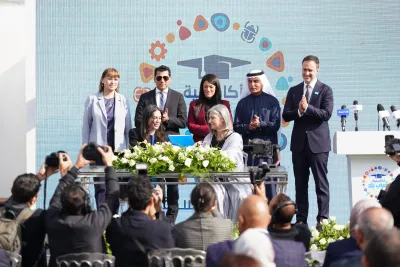
Second, the Shabab Balad Academy expanded across both physical and digital dimensions. The physical infrastructure advanced with the launch of the Shabab Balad HQ Academy in Cairo in late 2025, establishing a national hub for future skills, employability and entrepreneurship training, alongside plans for further expansion. In parallel, digital online learning systems were strengthened through the continued development of the Shabab Balad Academy digital platform, providing youth with access to online skills, career guidance and structured learning pathways from a range of United Nations bodies and other partners.
Third, strategic partnerships also deepened through the Shabab Balad PPYP model, which strengthened coordination across programmes and aligned United Nations and Government initiatives under a shared ‘learning-to-earning’ pipeline. This included expanded reach through strategic partnerships with Education Above All (EAA) Foundation, and a new agreement with the Abdulla Al Ghurair Foundation. These partnerships helped unlock additional resources and expand programme delivery, further strengthening access to learning, skilling and employment pathways for young people.
Fourth, through strong partnerships with Government, development partners and national youth empowerment programmes, as well as UNICEF and wider efforts supported by the United Nations, 2025 saw a significant scale-up of youth-focused learning-to-earning interventions. A total of 350,000 youth gained market-relevant skills through expanded skilling, digital learning and entrepreneurship programmes. In addition, 50,000 youth transitioned into livelihoods through wage and self-employment opportunities, while more than 32,000 enterprises and start-ups were supported to improve performance, increase business transactions and improve income generation.
Through 2025, Shabab Balad continued to evolve into a coherent national platform that integrates physical hubs, digital learning systems and strategic partnerships. By aligning diverse initiatives under a shared vision, it is enabling Egypt to scale inclusive pathways from learning to earning, positioning youth not only as beneficiaries, but as drivers of economic transformation and social change.
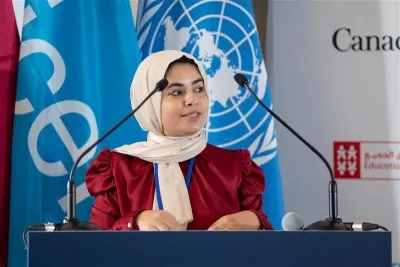
Shabab Balad is supported by the Government of Egypt, the United Nations, Global Affairs Canada, Education Above All Foundation and Abdulla Al Ghurair Foundation.
YuWaah (GenU in India) is supporting Government and ecosystem partners to embed youth skilling, employment and entrepreneurship pathways within public systems. This shift from stand-alone interventions to institutionalized, Government-linked approaches has enabled greater scale and sustainability, reaching 24.7 million young people in 2025.
Government integration has been central to this transformation. The Passport to Earning (P2E) digital skilling platform achieved national accreditation from the National Council for Vocational Education and Training, positioning it within the country’s formal skilling architecture. Its integration into state education systems across four states, alongside expansion through common service centres, has broadened access across rural and semi-urban communities, particularly for young women, while embedding digital skilling within public delivery systems.
YuWaah has also advanced the institutionalization of innovation and entrepreneurship within education policy and practice. Through partnerships with the Ministry of Education, Atal Innovation Mission at the National Institution for Transforming India (NITI Aayog), the All India Council for Technical Education (AICTE) and the Innovation Cell, the School Innovation Marathon is now embedded in 350,759 schools, reaching 2.47 million students. At the state level, initiatives such as the School Innovation Development Project in Tamil Nadu and Youth for Social Impact in Andhra Pradesh and Telangana demonstrate how innovation, problem-solving and civic engagement can be integrated into Government-led education and skilling systems, reaching students across secondary, higher education and vocational institutions. In Jammu and Kashmir, integration with Mission Yuva has enabled entrepreneurship support and engagement through Government platforms at scale.
YuWaah has also contributed to strengthening inclusive economic systems, particularly for young women. Delivery through Government-linked platforms such as self-help groups and common service centres has enabled pathways to wage employment, with 9,500 young women finding work, representing an 80 per cent placement rate among participants completing skilling pathways. This demonstrates the value of embedding gender-responsive employment approaches within existing public systems.
Innovations in financing and governance have further strengthened sustainability. As an ecosystem partner to the Nano Entrepreneurship Sustainability & Transformation (NEST) Outcomes Facility, YuWaah is supporting India’s first outcomes-based financing model for nano-entrepreneurs, designed to improve enterprise sustainability while strengthening accountability and evidence for public and private investment. This is complemented by proof-of-concept models such as Computer Didi and Didi Ki Dukaan, implemented with the Ministry of Rural Development, which are demonstrating scalable approaches for integrating women-led digital enterprises into the National Rural Livelihoods Mission.
YuWaah has also influenced policy design and delivery through technical support to flagship Government initiatives. Its engagement with the Prime Minister Internship Scheme led to key policy and platform improvements, including expanded eligibility (18 to 25 years), increased stipends (INR 9,000), flexible programme durations and enhanced transparency in access to opportunities, demonstrating how youth-centred evidence and user insights can strengthen large-scale Government programmes. These efforts are anchored in YuWaah’s PPYP platform, which enables coordinated action across Government, business, civil society and young people.
Additionally, the fourth Young People’s Action Team (YPAT) cohort of 41 young people played an active role in governance and advocacy, including through participation on YuWaah’s Board, Leaders’ Council and across 10 national and global forums. These mechanisms helped ensure that youth perspectives are embedded within national decision-making processes, including contributions to the Indian Voluntary National Review and climate action frameworks, strengthening the institutionalization of youth participation within governance systems.
YouthHub has emerged as a key national digital platform connecting young people to skilling, employment and livelihood opportunities while advancing systems integration across India’s youth ecosystem. Live integrations were established with two state governments and initiated with two central Government portals and another state government portal, positioning YouthHub as a connective layer across national and state youth service ecosystems. The Rajasthan State Department of Skilling, Employment and Entrepreneurship also formally adopted YouthHub as a delivery channel for young women’s placement pathways.
YouthHub reached 320,000 young people in 2025, with 48,000 registered users, 23,727 jobs listed and 2,411 job applications submitted. The launch of YouthHub Pathways, providing curated skilling-to-employment journeys in Rajasthan, Jharkhand and Odisha, integrated with Passport to Earning and created a more seamless pathway from learning to employment. Accessibility was further strengthened through Odia-language localization and integration with iSTEM for users with visual disabilities.
In a rapidly evolving ecosystem characterized by a growing number of skilling and livelihood platforms and the emergence of AI-enabled solutions, YouthHub is actively evolving to strengthen its value proposition for young people. This includes building AI capabilities while deepening Government adoption and integration, positioning the platform for national scale.
Looking ahead, YouthHub will introduce AI-enabled features such as intelligent opportunity matching, personalized recommendations and real-time analytics to help young people identify opportunities aligned with their skills and interests, while enabling governments and partners to track trends, measure impact and plan interventions more effectively. Together, these priorities position YouthHub as a scalable, inclusive and future-ready digital public platform that supports young people’s aspirations while strengthening the systems that serve them.
YouthHub is supported by PwC, Capgemini, the Children’s Investment Fund Foundation (CIFF), Global Affairs Canada and more than 20 partners across government, the private sector, civil society and youth networks.
In Kenya, GenU is strengthening national and sub-national systems for youth skilling, entrepreneurship and employment, aligning closely with the Kenyan Bottom-Up Economic Transformation Agenda. Across a diverse portfolio spanning skills, digital innovation, entrepreneurship and civic engagement, GenU Kenya reached 88,620 youth in 2025, working through coordinated public-private-youth partnerships that embed delivery within Government institutions, United Nations programmes, private sector ecosystems and youth-led organizations. This approach has reinforced sustainability, improved coordination and enabled pathways for scale.
A key milestone in institutionalization was the continued alignment of GenU programming with national youth employment and livelihoods frameworks, including implementation of the Joint United Nations Programme on Youth Skills, Employability and Civic Engagement across 14 counties. This has strengthened integrated delivery systems that connect skilling, entrepreneurship and civic participation within a unified national approach.
Systems-strengthening has been particularly evident in the green and agricultural economy. Through the Engaging Kenyan Youth in Agriculture and Nutrition (EKYAN) initiative, more than 68,000 youth were trained in climate-smart agriculture while being linked to more than 40 private sector actors across value chains. Beyond skills, EKYAN has contributed to shifting structural barriers for rural youth by enabling agripreneurs to build verifiable digital transaction histories through the OneNetwork platform. This effectively creates a digital business identity, improving their visibility and credibility with financial institutions and laying the groundwork for more inclusive rural credit systems.
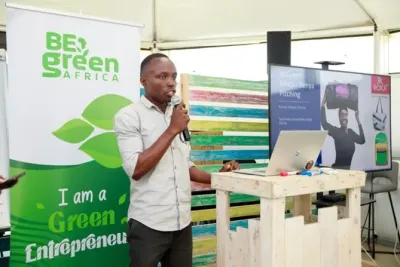
Institutional partnerships with the Government have also deepened. Through BeGreen Africa, collaboration with the State Department for Youth Affairs and Creative Economy (SDYACE) has strengthened structured pathways for green enterprise development, including access to training, mentorship, finance and policy support. SDYACE has played a catalytic role by linking youth enterprises to national recognition platforms, facilitating engagement with the Kenya Revenue Authority on tax relief measures, and enabling access to subsidized workspaces through county partnerships. These interventions demonstrate how policy and programme integration can enhance the sustainability and growth of youth-led enterprises.
Data and evidence systems have further reinforced institutionalization efforts. In partnership with the Kenya National Bureau of Statistics, the BeGreen Africa Kenya Learning Report has provided robust evidence on job creation, enterprise growth and environmental impact, strengthening the case for scaling youth-led circular economy models within national policy discussions. Digital platforms continue to underpin scale and access. Platforms such as Yunitok and YOMA have expanded structured engagement, enabling young people (128,000 and 68,000 respectively) to access learning, mentorship and livelihood opportunities, while strengthening national systems for youth outreach and participation.
Generation Unlimited Nigeria (GenU 9JA) is a nationally embedded public-private-youth partnership (PPYP) for youth skilling, employment and entrepreneurship, anchored within the Office of the Vice-President (OVP) and chaired by H.E. Vice-President Kashim Shettima. This leadership from the Vice-President has strengthened national ownership, governance and cross-sector coordination across Government, the private sector, development partners and youth around the youth skilling and livelihoods agenda. Anchored in the ambition to impact 20 million youth by 2030, GenU 9JA has become a Government-owned and nationally aligned platform that leverages digital systems and a network of more than 40 partners to create scalable pathways to work for young Nigerians.
H.E. Vice-President Kashim Shettima and the UNICEF Nigeria Representative co-chaired the inaugural GenU 9JA Board Meeting in August 2025, reinforcing GenU 9JA’s strategic positioning and national leadership role. The subsequent inauguration of the GenU 9JA National Secretariat within the OVP in March 2026 further established the initiative as a national coordination and systems-integration platform, linked to the National Economic Council and the National Council on Skills.
Through its PPYP model, GenU 9JA is aligning investments and delivery systems to create scalable pathways from learning to earning for young Nigerians. Between 2021 and 2025, the platform reached more than 11.14 million young people across all 36 states and the Federal Capital Territory, surpassing its four-year target (111.4 per cent) and establishing itself as one of the country’s largest youth skilling and transition-to-work platforms. In 2025 alone, 255,440 youth benefited from digital learning and connectivity initiatives; 1.38 million were connected to skills and livelihood opportunities; and 664,874 participated in civic leadership and empowerment programmes, reflecting an integrated national pathway from skills development to livelihoods.
Systems strengthening accelerated through the institutional integration of digital public goods and delivery platforms. Passport to Earning (P2E) and the Youth Agency Marketplace (YOMA) are increasingly being embedded within education, skilling and employment systems. In 2025, 199,000 youth enrolled in P2E digital and AI courses, with 58,957 learners certified. In parallel, 3,200 educators and 4,964 Government workers received credentials, strengthening public-sector capacity for large-scale digital learning delivery. YOMA, now with over 1 million users globally, more than 80 per cent of whom are Nigerian, has evolved into a national digital opportunity backbone, connecting youth to skills, volunteering and employment pathways through partnerships with Government and industry.
In addition, the Future-X Unilever Campus Ambassadors Programme (FUCAP), which provides practical 21st-century career and entrepreneurship skills, operates across 20 universities and polytechnics and has supported 919,135 youth with employability skills. The Girls’ Education Skills Partnership (GESP), implemented with FCDO and private-sector partners, has enabled 43,337 young women to access technical and vocational education, training and entrepreneurship pathways, while Standard Chartered’s Links2Work has entered a new phase targeting 3,000 young women. Green Rising mobilized 357,344 youth for climate action, strengthening youth agency and participation in national development priorities.
The European Union, the Spanish Agency for International Development Cooperation (AECID) and UNICEF are now partnering to strengthen Nigeria’s capacity to locally manufacture health, immunization and nutrition commodities while creating jobs and supporting economic growth. As the programme’s youth employment and skills partner, GenU 9JA will work with manufacturers, Government institutions and academia to equip young people, especially young women, with the skills, experience and pathways needed to access employment opportunities in the sector. Through targeted internships and fellowships, GenU will help develop the skilled workforce needed to support a more resilient, self-reliant and locally driven health manufacturing ecosystem in Nigeria.
Generation Unlimited South Africa (GenU SA) has advanced its institutional role in strengthening national systems that enable young people to transition from learning to earning. Working through a coordinated ecosystem of public, private and civil society partners, the platform reached over 3 million youth in 2025, with a strong focus on those from disadvantaged socio-economic backgrounds, while embedding scalable pathways across priority sectors.
A key area of system-strengthening was the green economy, where nationally aligned programmes are increasingly structured for scale. Through Green Rising, more than 19,420 young people engaged in community-based climate action, restoring ecosystems, managing waste and promoting sustainable livelihoods. This was complemented by the Green Learning-to-Earning programme, delivered via the YOMA platform, which institutionalizes green skilling pathways by linking training to livelihood outcomes. This serves as alternative routes into work or self-employment, with a focus on formal recognition within the national system. In 2025, this was further reinforced through the launch of the YOMA Impact Exchange, a system-level innovation designed to connect 6,300 youth to income opportunities, while verifying skills and measuring contributions to the SDGs through standardized impact certification. The key asset for YOMA in South Africa is YoID: a portable digital identity and credentialing layer that enables young people to carry verified skills, work experience and impact records across platforms, partners and job-matching systems.
YOMA is also supporting South Africa’s public employment ecosystem, including the Department of Basic Education and the Social Employment Fund, to help young people transition from temporary public employment into jobs, further learning or self-employment. Beginning with a pilot cohort, this model is designed to scale to 500,000+ Teaching Assistants, with YoID credentialing their experience and linking verified records directly to job-matching platforms and opportunity pipelines. It also incorporates nudging and off-ramp systems to guide youth toward real employment pathways after programme participation.
Work is also underway with the Development Bank of Southern Africa (DBSA) and partners on innovative finance models for youth livelihoods, particularly in the green economy. This includes blended finance, first-loss guarantees and outcomes-based financing linked to verified youth impact. The YOMA Impact Exchange provides the underlying measurement and verification system, enabling youth contributions (e.g. environmental restoration, service delivery, community work) to be recorded as verifiable outcomes that can be linked to incentives and, over time, to financing structures such as biodiversity and climate-related investment mechanisms.
System integration was also evident in the water, sanitation and hygiene (WASH) sector, where youth participation is being embedded into service delivery models. The Youth Leading in Water Resilience programme and the Water Quality Monitoring initiative together established a distributed model of citizen science and workforce development, equipping learners, unemployed youth and early childhood practitioners with water-monitoring capabilities. These efforts strengthen both community resilience and institutional capacity for ongoing environmental monitoring.
Entrepreneurship support has similarly evolved towards more structured and sustained ecosystem development. Initiatives such as the Recycling Champions Project and the Boosting Youth-led WASH Businesses accelerator move beyond one-off interventions to build pipelines of youth-led enterprises, supported through training, mentorship and linkages to municipal systems.
Complementary platforms, including the BeGreen Programme and the Entrepreneur Hub in Limpopo, further contribute to localized enterprise development, embedding entrepreneurship within regional economic systems. Across these efforts, GenU South Africa has prioritized mechanisms for youth engagement within national processes. Structured consultations enabled 285 young people from more than 80 organizations to contribute to South Africa’s 2035 climate targets, while large-scale platforms such as U-Report and the UNICEF Youth Volunteers’ initiative institutionalize continuous youth participation in policy dialogue and community action. Targeted support for young mothers further reflects a systems approach to inclusion, linking peer support models with public health services.
Digital systems strengthening has also been a key enabler. Nationally accessible platforms such as Siyavula and Junior Tukkies continue to provide foundational STEM learning at scale, while initiatives like the Game Changers Coalition and school-based coding and robotics centres expand pathways into the digital economy. These efforts increasingly align education systems with emerging labour market demands.
This institutional consolidation was reinforced in November 2025, when GenU South Africa was formally endorsed by the Presidential Youth Employment Intervention, the country’s flagship youth employment framework. This endorsement marks a critical step towards full system integration, with partnership agreements and implementation models under way to position GenU South Africa as a central driver of the national youth employment agenda.