World Environment Day 2025: Young People at the Heart of Climate Action
Equipping Youth for Climate Leadership and Green Livelihoods


June 5, 2025 – Growing up in Aqaba, Jordan, Mariam (23) watched as plastic bags and discarded bottles threatened the coastline of her hometown every day. The once-clear waters of her hometown grew polluted and threatened the marine life she had cherished since childhood. Rather than look away, she took action – she organized cleanups, rallied her classmates, and educated others about protecting marine life. Now, as youth climate leader and teacher, she’s helping a new generation step up for the planet.
“There is still time to save the planet. Each one of us can make the change,” said Mariam. “Even if we start by conserving energy and water and increasing recycling, each act contributes to saving our beautiful planet and every living creature that relies on it to survive.”
“It terrifies me to think that the climate is warming in such a short time. Although my city Aqaba is known for its warm weather, it has never been as hot as it has been in the past few years.”
Mariam’s story is echoed by millions of young people across the world – youth who refuse to wait for someone else to fix things. From collecting waste, to restoring green spaces and driving climate-friendly policies, their efforts are already making a difference. And they’re sending a powerful message: communities and decision-makers alike can, and must, do more!
Each year, World Environment Day reminds us both of the urgent environmental challenges we face, and the power and potential within communities to drive solutions.
In 2025, the realities of climate change are impossible to ignore: heat waves that shatter records, floods that swallow entire neighborhoods, and droughts that turn once-fertile land to dust. Beneath these events lies their true cost: livelihoods lost, and futures thrown into uncertainty – especially for those already vulnerable.
Nearly half the world – 3.6 billion people – live in areas highly vulnerable to climate change impacts, a number set to rise as temperatures climb. Every sector, region, and generation is bound together in this challenge, and the choices we make right now will be felt for generations.
Action on climate change can no longer wait.
Today’s young people are at the heart of climate action. No one has more at stake – or more to offer – in the fight against climate change than youth. They will live longest with the consequences of today’s decisions, and are eager to bring fresh ideas, energy, and urgency to a challenge that needs all three.
But while their determination is clear, too many are still shut out from opportunities to contribute meaningfully. For example, only 0.76% of grants from the largest climate foundations are directed at youth-led climate justice initiatives.
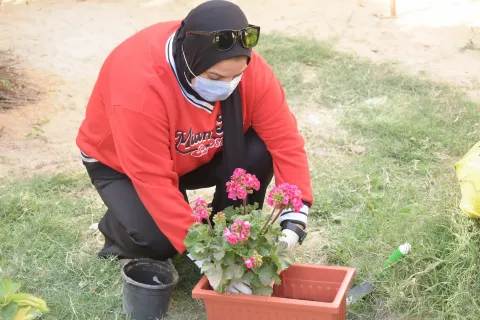
When young people are supported to take climate action – leading community greening initiatives, joining eco-initiatives, or innovating around sustainable solutions – the value of their actions extends far beyond solving a pressing community need. These hands-on experiences also teach problem-solving, teamwork, adapting to new technologies, and a sense of shared responsibility – the foundation of the “green skills” that are rapidly becoming a bridge to future careers.
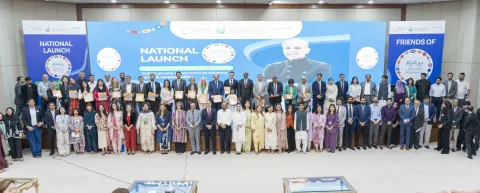
That’s why Education Above All (EAA) Foundation and UNICEF’s Generation Unlimited have joined forces to support 370,000 young people across Jordan, Lebanon, and Egypt, empowering them to lead environmental action, green their communities, and access sustainable livelihoods. We’re supporting young people like Basmala who is transforming palm waste—a source of pollution in Egypt—into beautiful, sustainable products, creating jobs and training other women in her community to do the same.
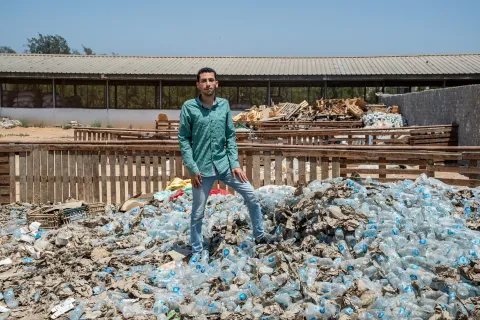
And the story repeats across continents: youth who are empowered and equipped quickly become problem-solvers for the toughest local climate issues. Consider, for example, the recent youth-led ventures behind Generation Unlimited’s imaGen Ventures programme. They are turning e-waste into solar lamps in Nigeria, developing bio-based fertilizers in Egypt, introducing solar-powered water purifiers in Uganda, and transforming pineapple waste into sustainable leather in Kenya. Each solution brilliantly addresses a pressing local problem while simultaneously strengthening the skills needed to navigate and shape the green economy.
This is where the promise of the ‘green economy’ becomes real and immediate. As more industries shift toward sustainable practices and the need for climate solutions intensifies, the practical skills young people are building in their communities are rapidly becoming the currency of tomorrow’s workforce.
Local action builds trust, momentum, and resilience within communities. Yet, just as importantly, it gives young people a bridge between action for the planet and livelihoods.

Unlocking Opportunity and Impact
The acceleration of the green economy is unmistakable. The ILO projects the creation of 100 million green jobs by 2030. Data from LinkedIn shows that those with green skills are being hired at higher rates than their peers; and demand for green skills is outpacing supply.
Additionally, the World Economic Forum says roles in agriculture and food production are the largest-growing segment of the global labor market – a surge driven by the green transition and rising demand for sustainability. This shift has the potential to reshape both rural and urban economies, provided that training and opportunity are accessible to all.
Yet, the promise of these opportunities is not guaranteed. A persistent gap remains, with too many young people, especially in vulnerable regions, lacking access to the skilling, mentorship, and experience needed to match their potential to the demands of a changing world. According to a new report by Capgemini’s Research Institute and UNICEF’s Generation Unlimited, only 44% of young people feel equipped with the skills needed for today’s green workforce.
Bridging this gap is essential, not just for expanding economic inclusion, but to make sure the green transition truly works for everyone.
We believe that supporting youth climate action at the local level – even in the smallest ways –holds incredible power to make this happen. Each action sets off a chain reaction: young people step up as problem-solvers for their communities, begin to seize opportunities in the green economy and create new livelihoods.
Today, as we celebrate World Environment Day, the message is both urgent and hopeful. The path to a climate-resilient future will only be paved if young people are trusted, equipped, and supported at every step.
Supporting young people to take climate action is one of the smartest, most forward-looking investments we can make. It’s how we build a just, resilient future – starting today.