
Financing the Future: Unlocking Innovative Finance to Drive Youth Skills, Jobs & Entrepreneurship
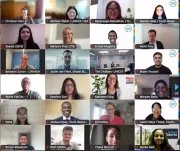
A meeting of the GenU Global Leadership Council to identify how innovate financing can be leveraged to scale Youth Skills & Livelihoods.

New York, April 29 – Global leaders and experts from the private sector, governments, foundations, United Nations agencies, civil society, and young entrepreneurs convened for a high-level meeting hosted by Generation Unlimited to explore how to leverage innovative financing to scale skilling and livelihoods opportunities for young people.
Every month, 10 million young people reach working age. Over the next decade, 1.2 billion youth will enter the workforce with only 420 million jobs being created. Young people today are facing a rapidly changing and uncertain economic future. 20% of young people globally are not in education, employment, or training (NEET).
Traditional means of development financing are no longer enough. There is a need to unlock new forms of capital by forging bold cross-sector partnerships, and creating financing models that are scalable, sustainable, and youth-centered . With the right investments and opportunities, young people can drive their own economic empowerment.
Innovative ways of financing offers an opportunity to do just that. Leveraging catalytic tools, and bringing governments, the private sector, philanthropy, and multilateral institutions together in new ways, can enable new forms of financing and impact for young people.
This opportunity for collaboration was underscored by Bob Moritz, former Global Chairman of PwC, in his final meeting as GLC Co-chair, who emphasized how “GenU (and the GLC) have been a great example of how collaboration should work, collaboration under the umbrella of GenU, but also collaboration amongst one another to come together to have impact”.
Fellow co-chair Catherine Russell, Executive Director of UNICEF, set the tone by urging those in attendance to push boundaries and raise bold ideas and mentioned how “innovative finance, when aligned with the potential of youth, really can become a catalyst for inclusive growth and for generational opportunity”.
The meeting featured several prominent speakers including Christian Klein, CEO of SAP and Chair of the GenU Board, who stressed the need to take a leadership role and double down on youth empowerment and the GenU vision to make a real impact on the next generation, “GenU’s mission of skilling and connecting youth to employment and entrepreneurship is now more important than ever”.
The need for collaboration to empower and finance youth was a recurring theme throughout the meeting, with Bill Winters, CEO of Standard Chartered, highlighting how every sector has a role to play in unlocking new forms of capital to fund youth skilling, entrepreneurship and employment, “The key is innovating, and the key to innovating is collaboration”.
There were also key contributions from young people on the topic of innovative finance. Maryam Bello, Executive Director of ITIS (Impact, Technology, Innovation, and Sustainability 4 Development) and a recent addition to the GLC youth representative cohort, drew from personal experience to shed light on how young people are generally excluded from traditional means of financing and emphasized that the status quo needs to change, “Young people don’t need charity, we need investment”. In a response to Cathy Russell’s call for boldness, Maryam posited that a youth centric approach and emphasis on sustainable and long-term outcomes for young people can directly benefit youth and their enterprising endeavors as well as benefit society at large.
During an expert panel discussion which featured Jorge Familiar, Treasurer and Vice-President of the World Bank; Marisa Drew, Chief Sustainability Officer for Standard Chartered; Fahad Al-Sulaiti, Director General of the Qatar Fund for Development; and Ousman Toure, a Young Entrepreneur and youth leader from the Gambia, the current inadequacy of conventional finance models for young entrepreneurs was referenced as an obstacle to job creation, and the need for finance mechanisms which cater specifically to the needs of young people was offered as a possible solution to future growth in youth employment. Panel members touched on the importance of convening a range of different actors with differing skillsets, all with the common goal of investing in youth, in order to deliver youth focused finance mechanisms at scale. Partnering with experts at the country level and developing the youth ecosystem were also identified as key factors for successful job creation and sustainable long-term impact for skills and livelihoods.
Audience members contributed to the discussion during an interactive Q&A session, where collaboration was once again a prominent theme, specifically the vital role that the private sector can pay in scaling up innovative finance initiatives and the need to involve governments and youth representatives in the policy forming and decision-making processes. Emphasis was also placed on leveraging existing examples of young entrepreneurs accessing capital in order to influence policy on youth focused innovative finance mechanisms, as well as applying the framework of existing mechanisms which have proven successful, such as the Bahamas debt-for-nature swap spearheaded by Standard Chartered, to create youth specific financing models rather than starting from scratch. In terms of next steps, Bob Moritz encouraged those present to leverage the lessons learned over the course of the meeting, so that the GLC take concrete action to realize innovative finance ecosystems tailored for young people.
There were also key new partnership announcements, with Accenture announcing it has signed a three year extension to its partnership with GenU’s Passport To Earning programme which will focus specifically on skilling young people with coding, presentation and financial skills. An exciting new partnership with Adobe was also announced where the partnership will focus on skilling young people specifically to participate in the creative economy.
Incoming GLC co-chair and PwC Chairman, Mohamed Kande, touched on some of the main points that were raised when he underscored the need to include both the public and private sectors in the scaling up of job creation, and with an eye on the future called on the GLC to leverage new technology, particularly AI, to create new opportunities for young people. Mohamed’s predecessor at PwC and outgoing GLC co-chair, Bob Moritz, signed off on his five-year tenure by reinforcing the purpose of the GLC which is to be aspirational and inspirational, and to bring people together to impact youth and to enhance their livelihoods as well as that of their families, which in turn will enable their communities to have long term sustainable success.