
Turning AI and Green Investment into a Youth Dividend
The Generation Unlimited Global Leadership Council advances practical pathways from investment to skills, decent work, entrepreneurship and sustainable livelihoods for young people.

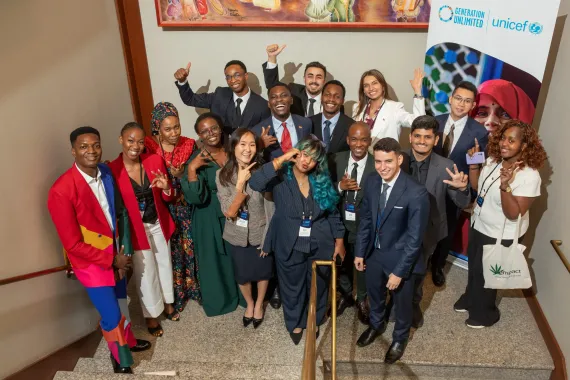
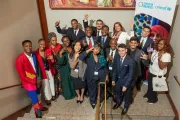
New York, 21 September 2026 – The Generation Unlimited Global Leadership Council (GLC) convened Heads of State and Government, business leaders, development partners and young changemakers in New York to advance a shared priority: ensuring that growing investment in artificial intelligence and the green economy creates tangible economic opportunities for young people. Young people also joined the meeting online from 15 countries, extending the discussion around the world.
Co-chaired by Catherine Russell, Executive Director of UNICEF, and Mohamed Kande, Global Chairman of PwC, the meeting focused on how governments, businesses, development institutions and young people can connect major investments with the skills, employment and entrepreneurship pathways required for young people to participate in emerging industries.
The stakes are considerable. Over the next decade, 1.2 billion young people in developing economies are expected to reach working age, while only around 400 million jobs are projected to be created. At the same time, investment in artificial intelligence (AI), digital infrastructure, renewable energy and other parts of the green economy is reshaping industries, labour markets and the skills employers need.
Opening the meeting, spoken word poet, climate leader and youth advocate Victory Ashaka captured the consequences of failing to make that connection, setting the tone for a meeting grounded in what it means for young people seeking a reliable route from learning to livelihoods.
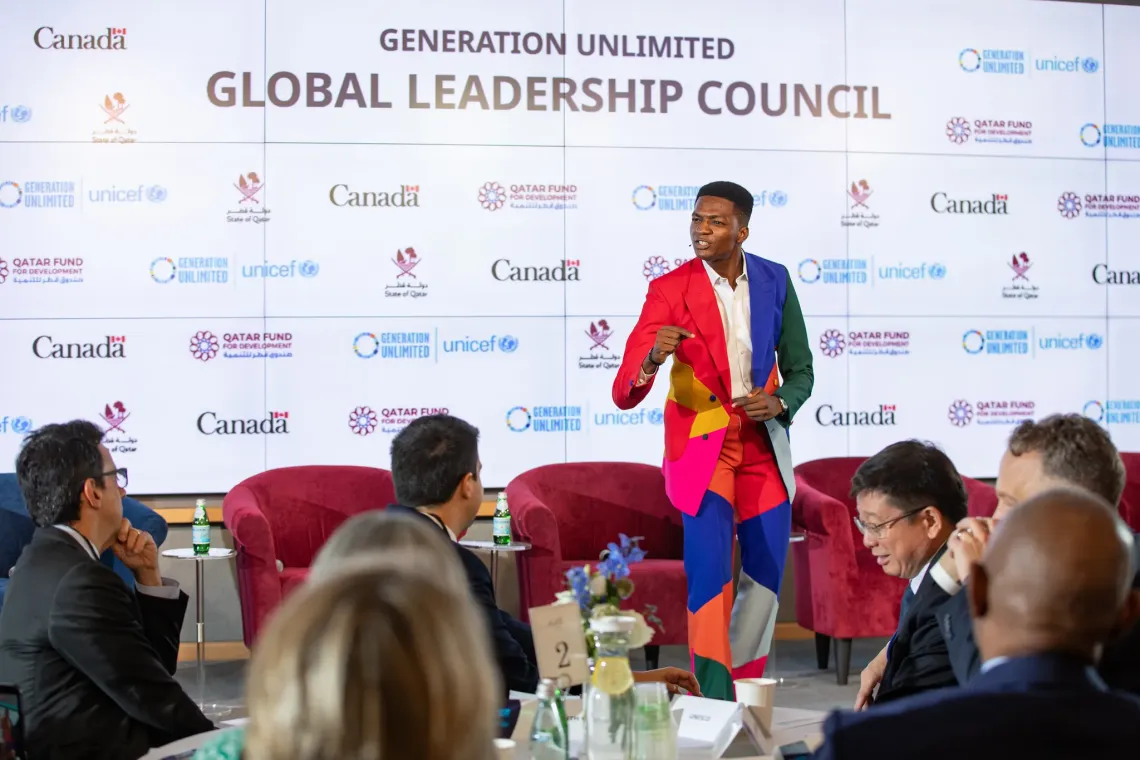
“Imagine your body without skin, a house without walls or a country without borders. Such is having talent without opportunities.”
The Youth Position Statement placed a standard before the Council: investment should be judged by whether it leads to decent work, sustainable youth businesses, higher incomes and greater agency for young people, not only by the number who complete training.
“Investment in an AI-powered business, renewable energy project or a new digital industry does not automatically translate into opportunities for young people. That connection must be built.”
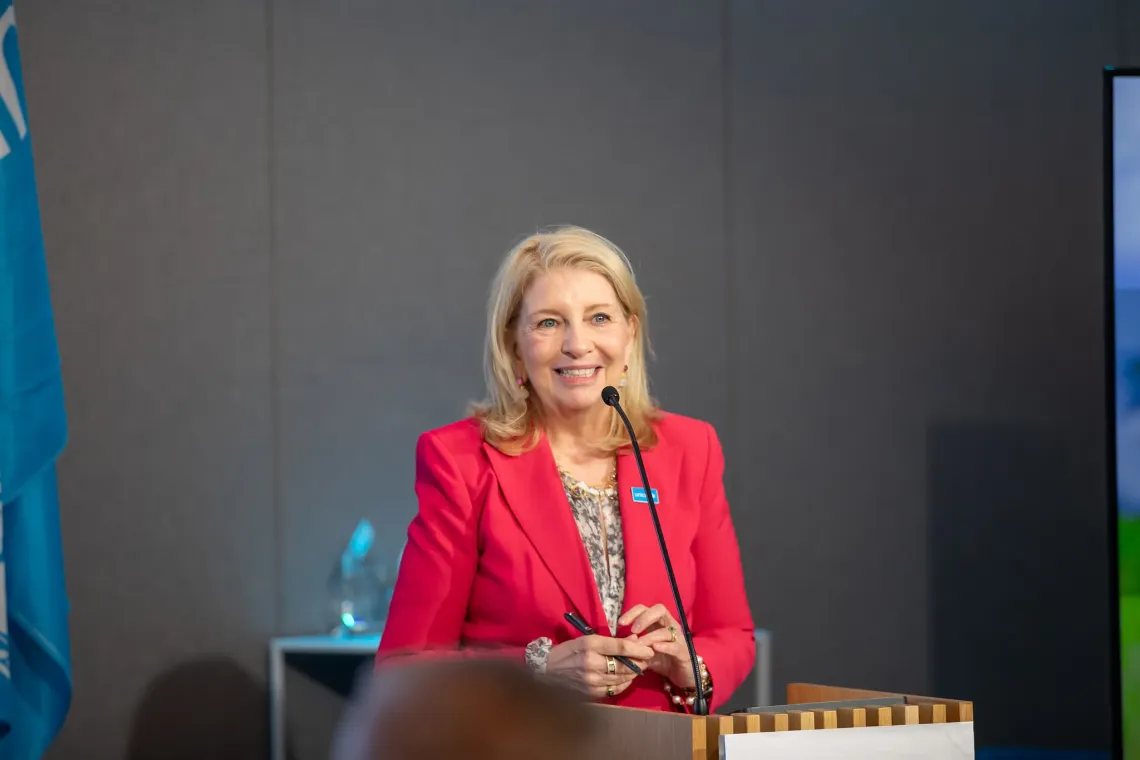
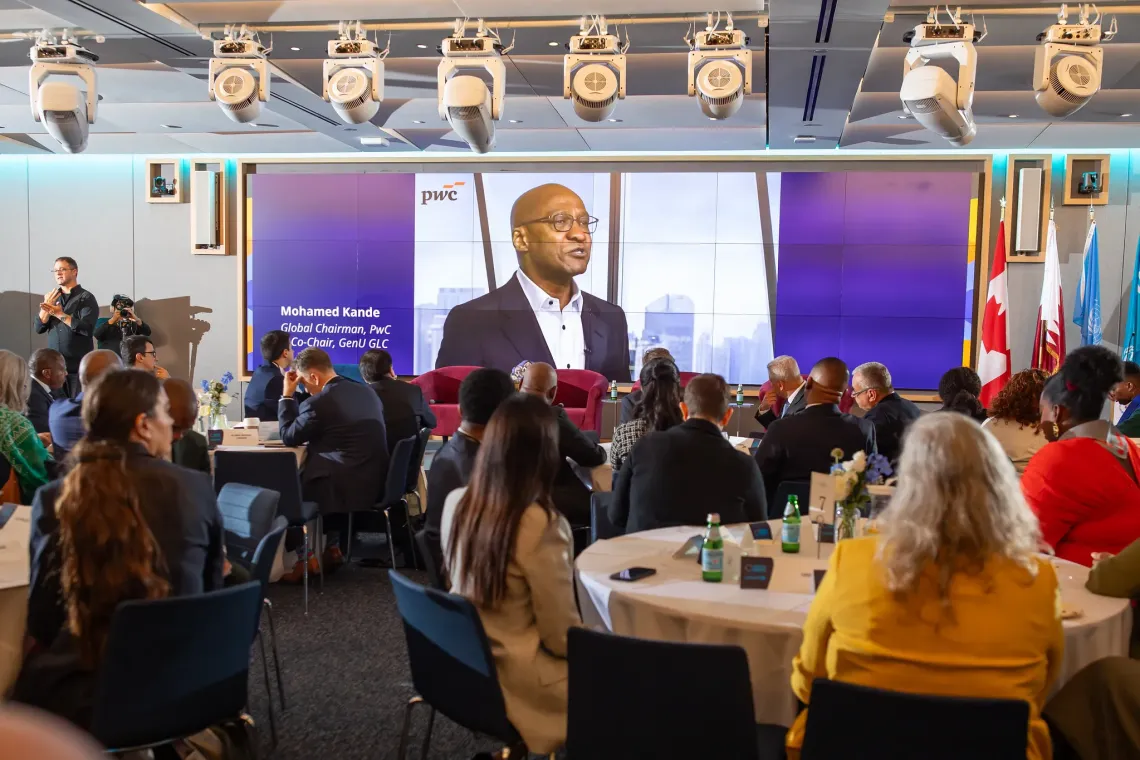
"Let’s use our time together to focus on what it will take to turn the trillions being invested in artificial intelligence and the green economy into skills, jobs, entrepreneurship and livelihoods for young people (…) This group has the reach, resources and influence to make a real difference, and we have the ability to get things done."
Designing youth livelihoods into green investment
Moderated by Dr. Sonia Ben Jaafar, CEO of the Abdulla Al Ghurair Foundation and a member of the GenU Board, the Council’s first Spotlight Conversation examined how growing green investment can translate into skills, jobs, entrepreneurship and sustainable livelihoods for young people.
Global clean-energy investment is accelerating, but the discussion underscored that investment in infrastructure will not produce a youth dividend unless workforce development, entrepreneurship and market access are incorporated from the beginning.
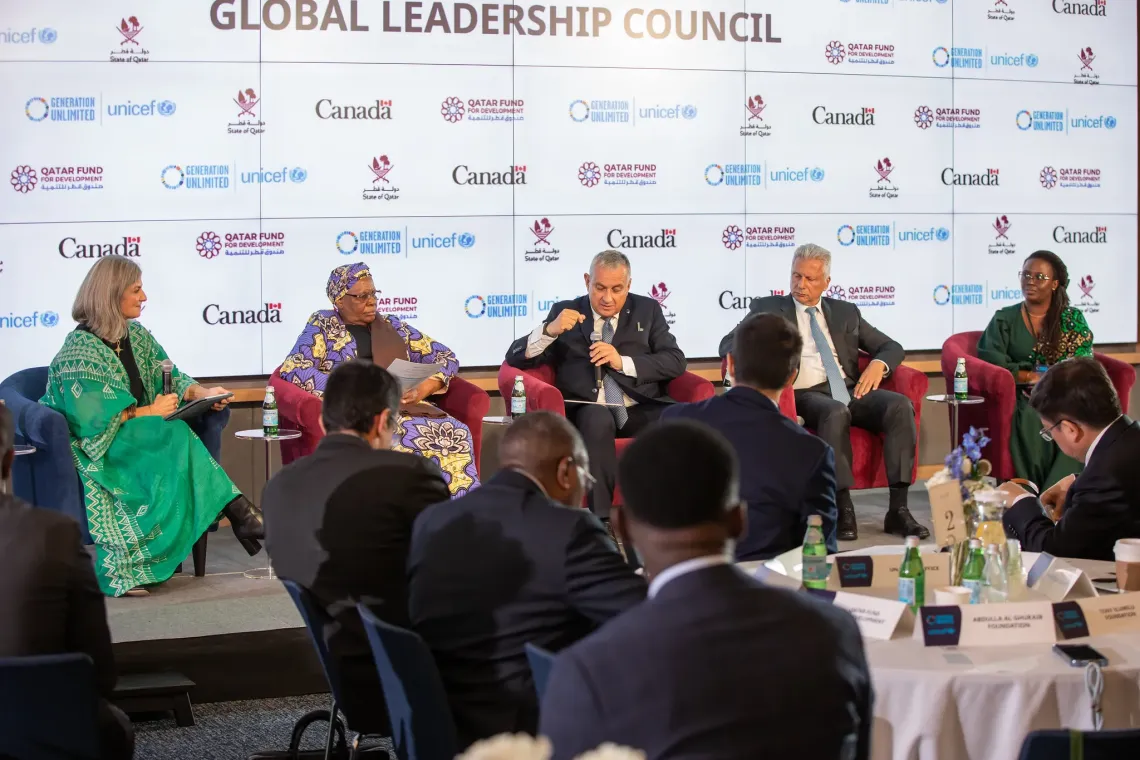
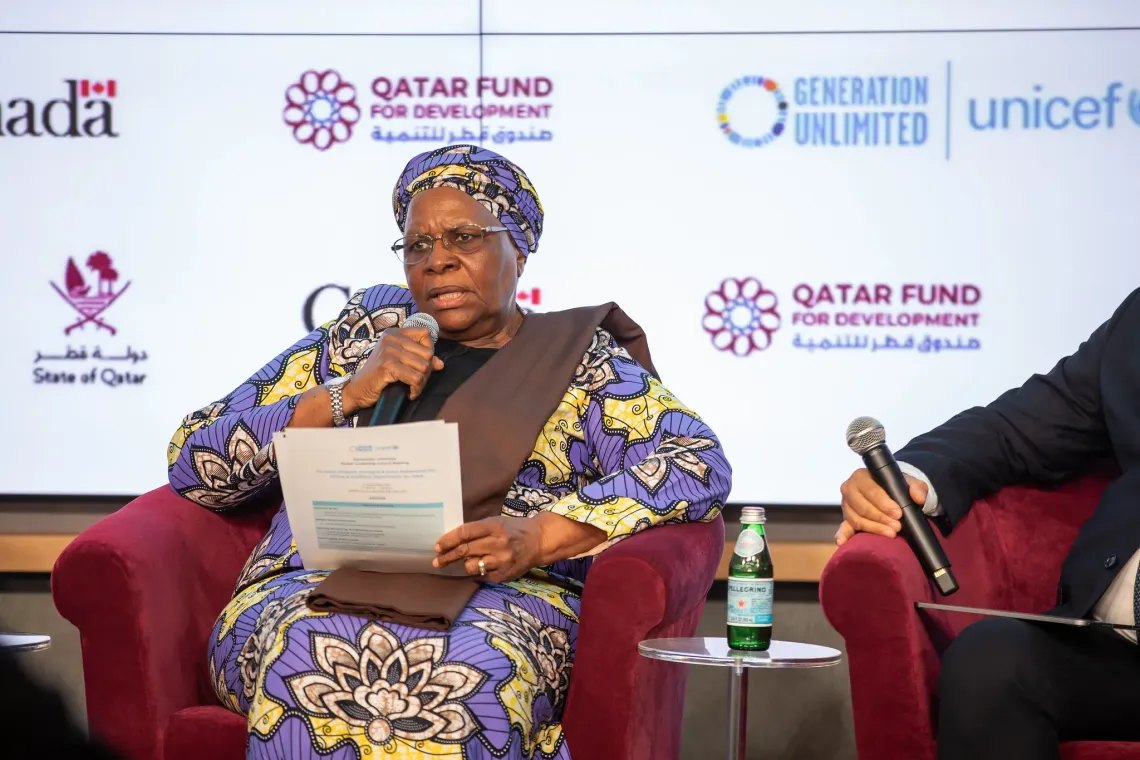
President Netumbo Nandi-Ndaitwah of Namibia emphasized that the green transition must respond to countries’ immediate development and employment needs while preparing for emerging industries. Namibia currently has eight green-hydrogen projects in progress, but the President stressed that the country’s transition must be properly managed alongside industrialization, value addition and job creation in sectors such as agriculture and natural resources.
"As a government, we have to create opportunities. And when you are empowering young people, you should also do your best to create the market for their product."
For Jozef Síkela, European Commissioner for International Partnerships, investment in skills should accompany investment in infrastructure and other physical assets. He highlighted the European Union’s use of grants, policy support and risk-sharing instruments to attract private investment while creating education and employment opportunities. He also pointed to the European Union’s €6 billion Investing in Young Businesses in Africa initiative, which supports more than 1,200 projects across the continent. Síkela argued that development finance should help countries retain more value from their resources by supporting local production, regional supply chains, knowledge transfer and higher-quality employment.
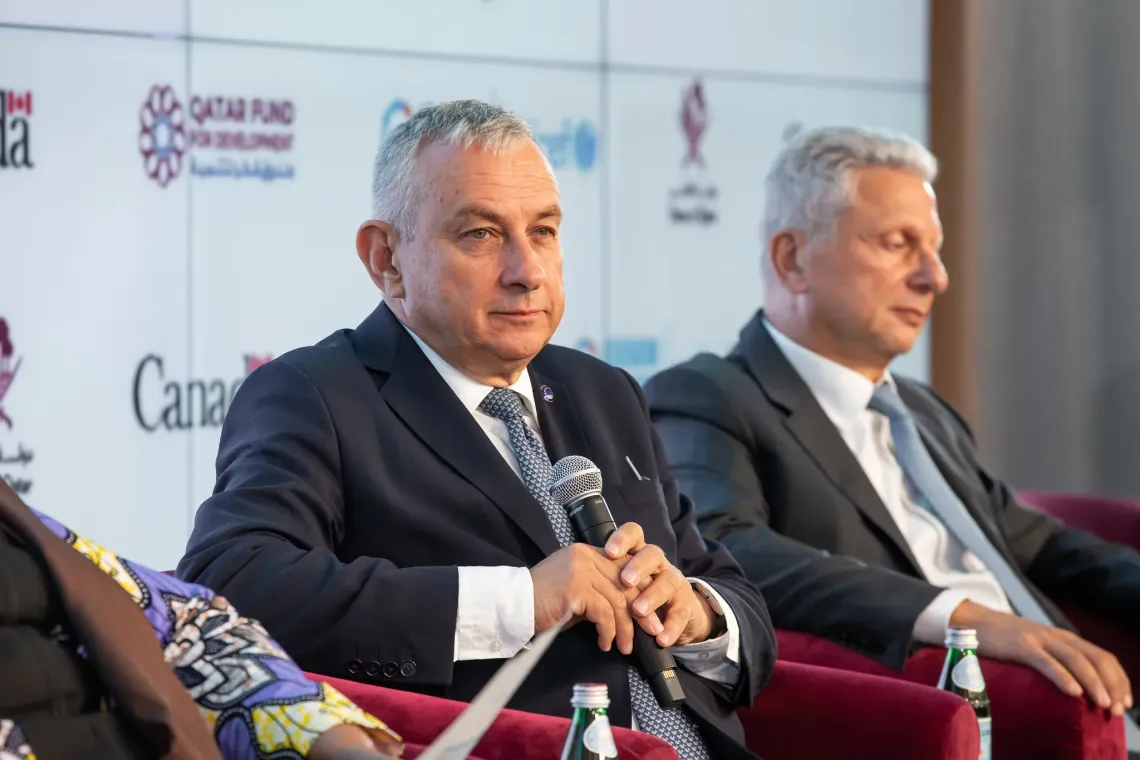
“This is not only about creating jobs. This is about creating high-quality jobs (...) We need to leave the value in the home countries and help them participate in regional and global supply chains.”
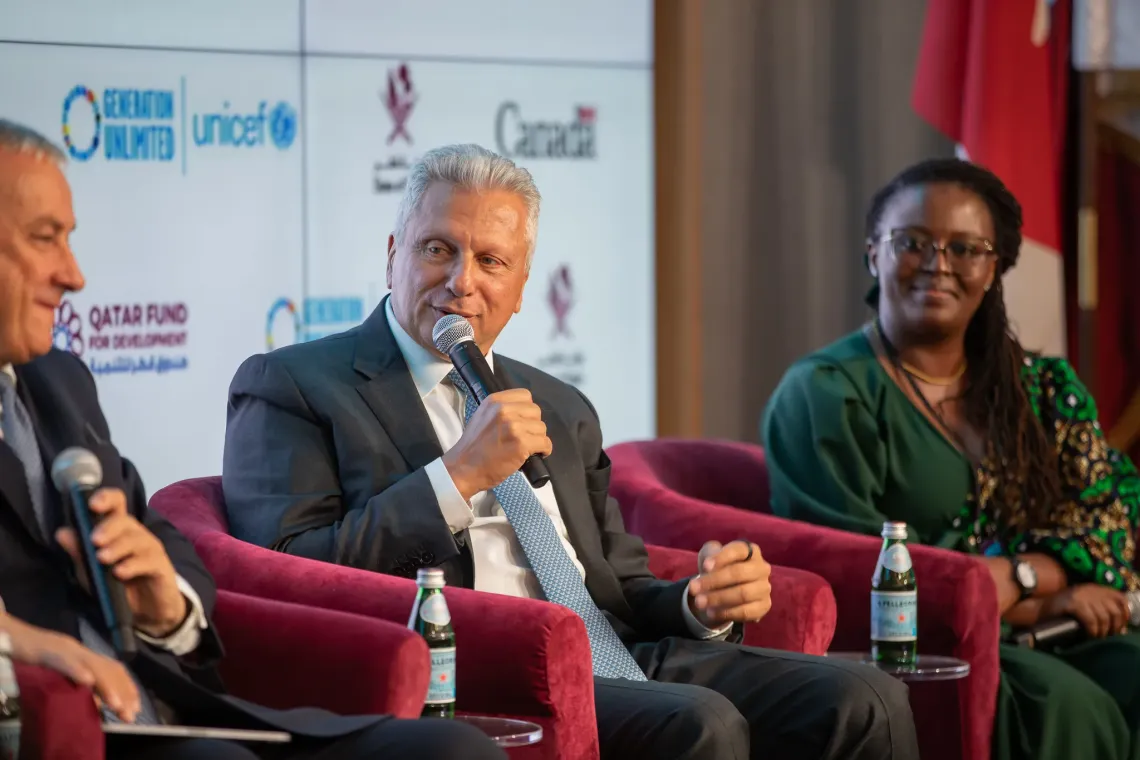
Aiman Ezzat, CEO of Capgemini and Vice-Chair of the Generation Unlimited Board, emphasized the importance of tying skills development to confirmed market demand. If a country is investing in an industry such as green hydrogen, he said, governments and partners should identify the required workforce capabilities before the investment is operational and prepare young people accordingly. He also noted that green livelihoods extend beyond large infrastructure projects to areas such as energy conservation, water management, recycling and the productive use of agricultural waste.
It is very important that we build skills based on needs that exist, not based on what we would like to build (...) if we know we are going to invest in green hydrogen in a country, then we know what kind of skills we are going to need in advance.
For Mary Nyambura Njeri, Founder and CEO of Eco Charge Limited, and a youth representative to the Council meeting, the central issue was whether young entrepreneurs could participate as suppliers and employers, rather than being limited to training or entry-level jobs. She called for de-risked finance, access to markets and opportunities for youth-led businesses to enter the value chains developing around major green investments.
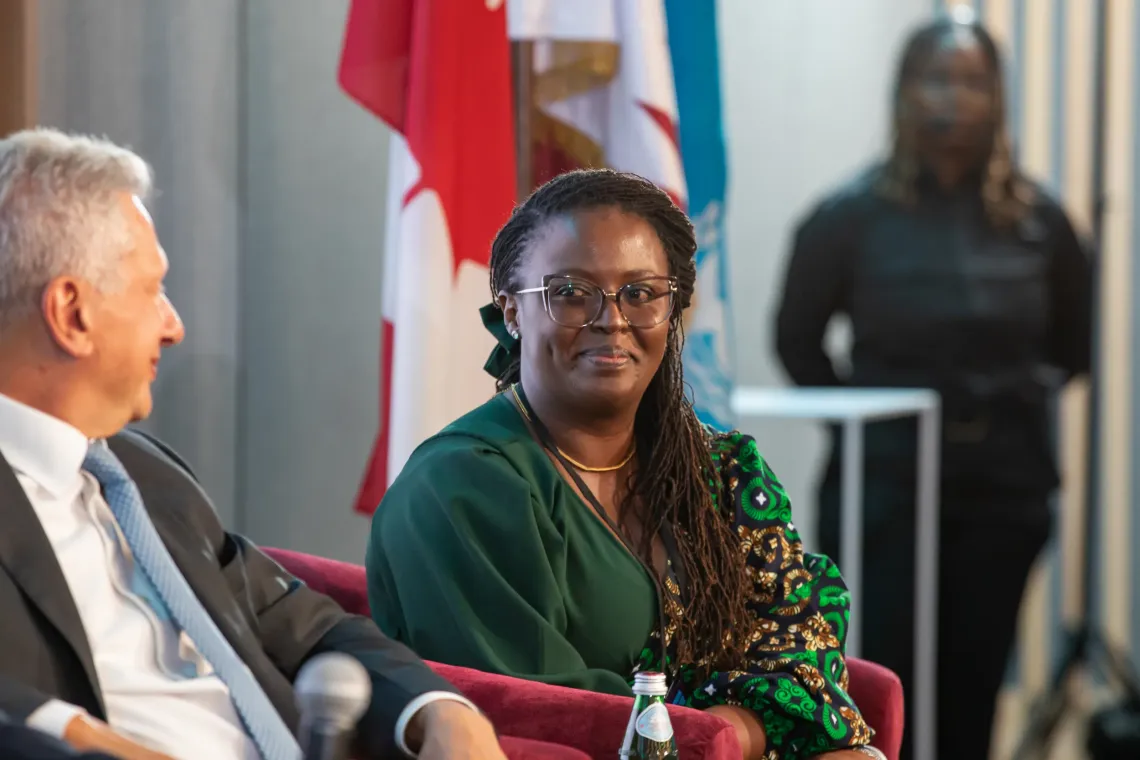
"Young people" are asking for a piece of the cake. Not just training, not just getting jobs, but us having to become the suppliers, having to become the employers.”
The discussion produced alignment around the need for green investment to account for the entire livelihood pathway. Skills must respond to actual demand, and young people need access not only to training and finance, but also to customers, procurement opportunities, value chains, networks and sustained enterprise support.
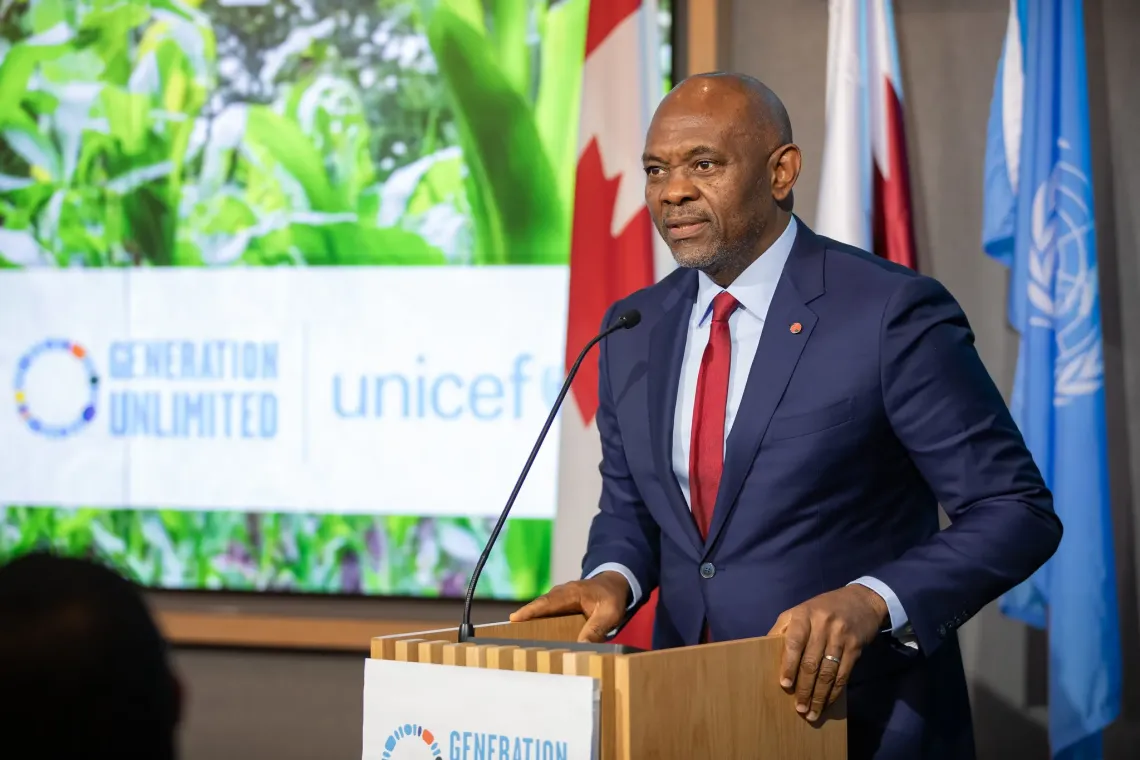
Tony Elumelu, Founder of the Tony Elumelu Foundation, reinforced this point, presenting GenU’s Youth Livelihoods Showcase at the meeting. He argued that capital must be deployed in forms entrepreneurs can access and use, and that entrepreneurship should be treated as a route to creating jobs as well as preparing individuals to fill them. He called on institutions in the room to mobilize additional partnerships and provide young entrepreneurs with capital, mentorship, advocacy and practical support.
“It is not just about preparing young people for jobs. It is also about preparing them as entrepreneurs so that, collectively, all of us can create the jobs that are needed.”
Building complete pathways into the AI economy
The Council’s second Spotlight Conversation, moderated by Justin Spelhaug, President of Microsoft Elevate and GenU Board member, examined how AI investment can create broader opportunity rather than deepen existing divides. While the discussion recognized AI’s potential to increase productivity, help businesses grow and create new forms of work, speakers repeatedly returned to the need for pathways that connect technical learning with practical experience, employment and entrepreneurship.
Adv. Duma Gideon Boko, President of Botswana linked the country’s AI ambitions to economic growth, foreign direct investment and rural industrialization. He said Botswana must equip young people with the skills to attract and participate in efficiency-seeking investment, while ensuring that young people in sparsely populated and rural areas are not excluded. He also identified access to data as essential for youth technology enterprises, and that his government advancing an accelerated digitalization programme intended to make relevant data easier for young people to access.
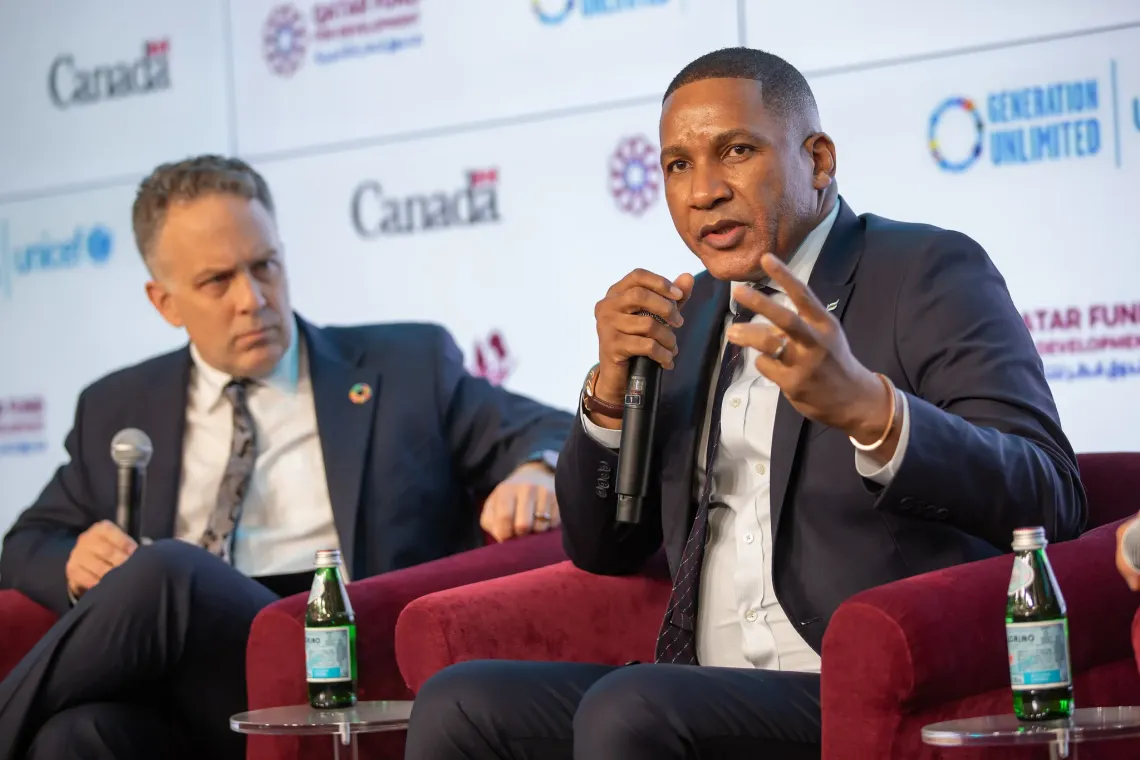
“We need to have our young people attain the requisite skills to participate from the perspective of employability, but also to become entrepreneurs and take an active part in the productive sector of the economy.”
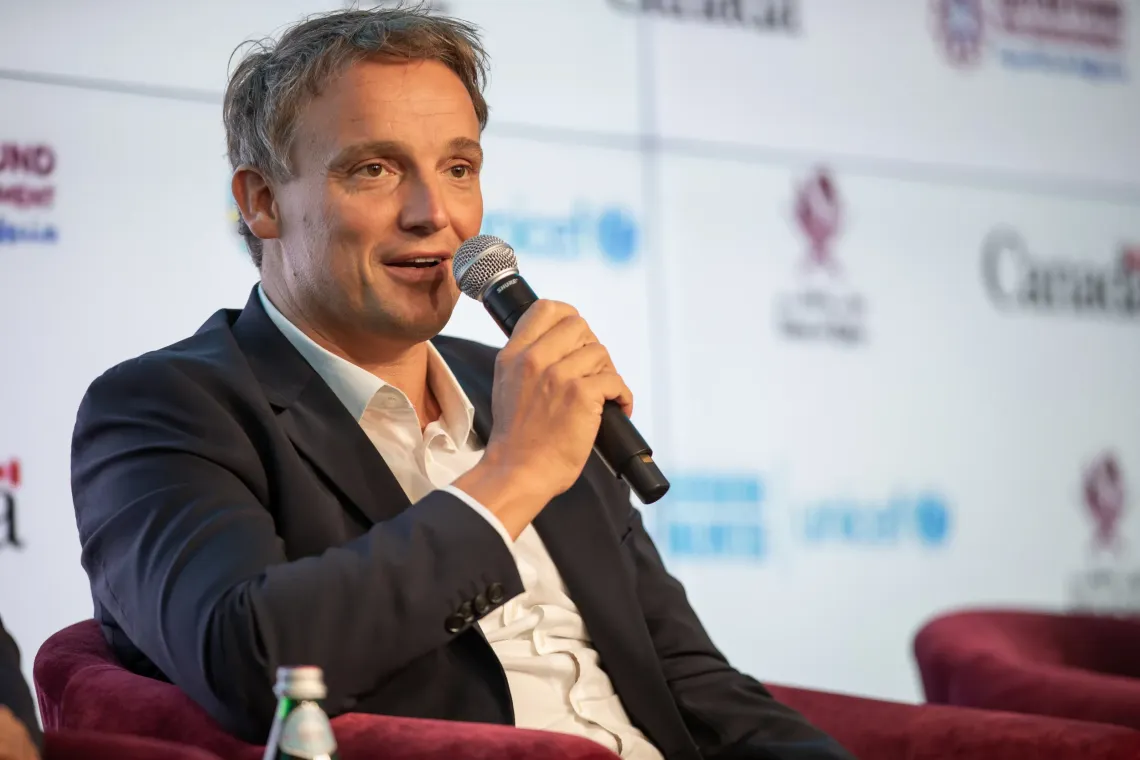
Christian Klein, CEO of SAP SE and Chair of the GenU Board, emphasized that finance is only one part of what young start-ups need to succeed. Entrepreneurs must also solve real market problems, build teams with complementary capabilities, reach customers and receive sustained support as they grow. Through its social sabbatical programme, SAP connects entrepreneurs with executives and specialists who provide practical guidance on using AI, strengthening business models, developing logistics and online channels, and generating demand through wider customer networks.
AI can make it easier to perform functions such as financial accounting or setting up an online shop, he noted, but entrepreneurs still need the skills, mentoring and market access to use those tools effectively and scale.
“It’s not just about capital, it’s about knowledge, it’s about creating the demand pathways, it’s about connecting [entrepreneurs] to the ecosystem that you have at SAP, and it’s about taking a long-term commitment, because this doesn’t happen overnight.”
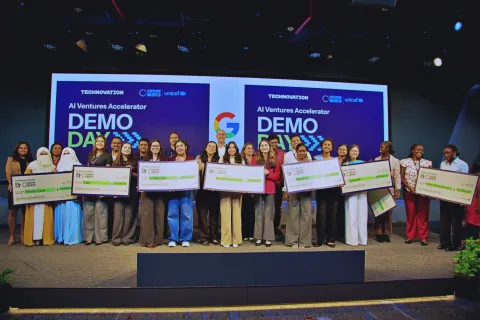
Naranzaya Batsaikhan, Co-Founder of Urimor Terra Development and a youth representative on the GenU Global Leadership Council, described her journey from participating in the AI Ventures Accelerator to leaving full-time employment to build an AI tool that identifies renewable-energy opportunities at former mining sites. The programme gave her technical training and the confidence to begin, she said, but the experience also showed that support must continue beyond the prototype stage. She called for more paid apprenticeships, opportunities to apply AI skills in practical settings and measures that track whether young people build businesses, access capital, secure jobs and improve their livelihoods.
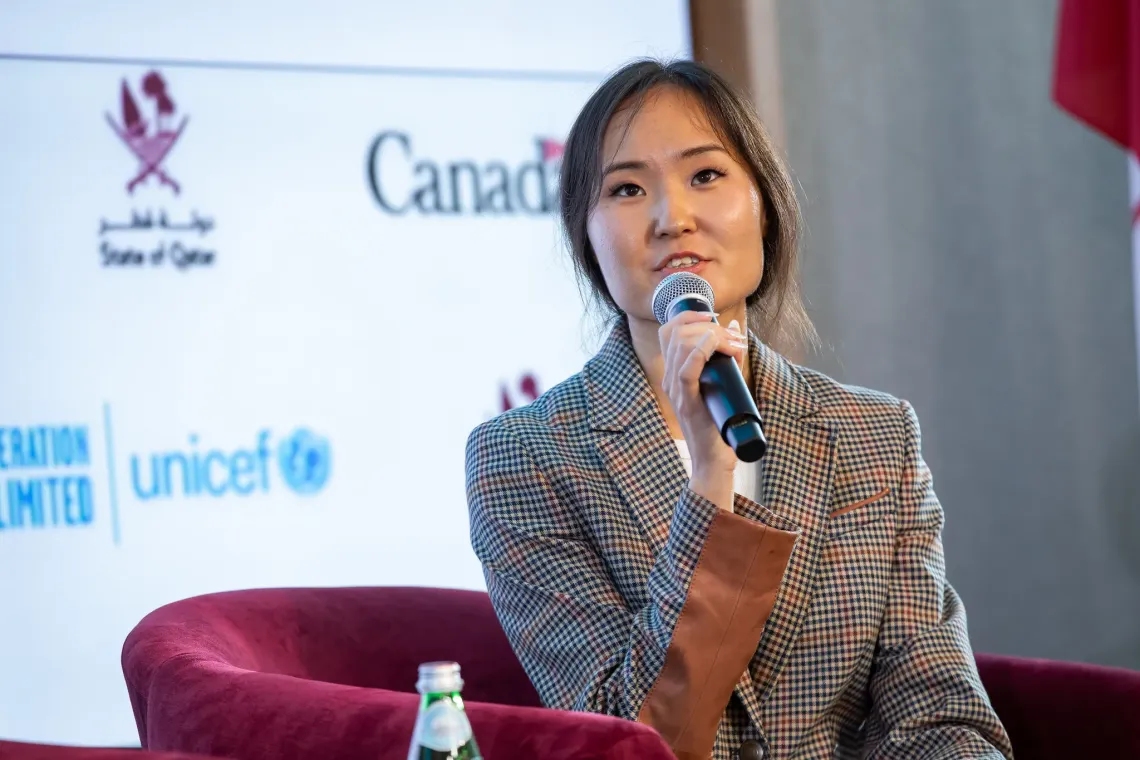
“The missing piece is not just technical training or AI skilling. It is more about the pathway from learning to earning. It’s the whole journey."
Felipe Paullier, Assistant Secretary-General for Youth Affairs and Head of the United Nations Youth Office, stressed that young people must help shape solutions, investment decisions and institutional accountability from the outset
“Meaningful youth participation is not something that comes after decisions have been taken. It is about how we design solutions, how we decide on investments and how we hold our institutions accountable.”
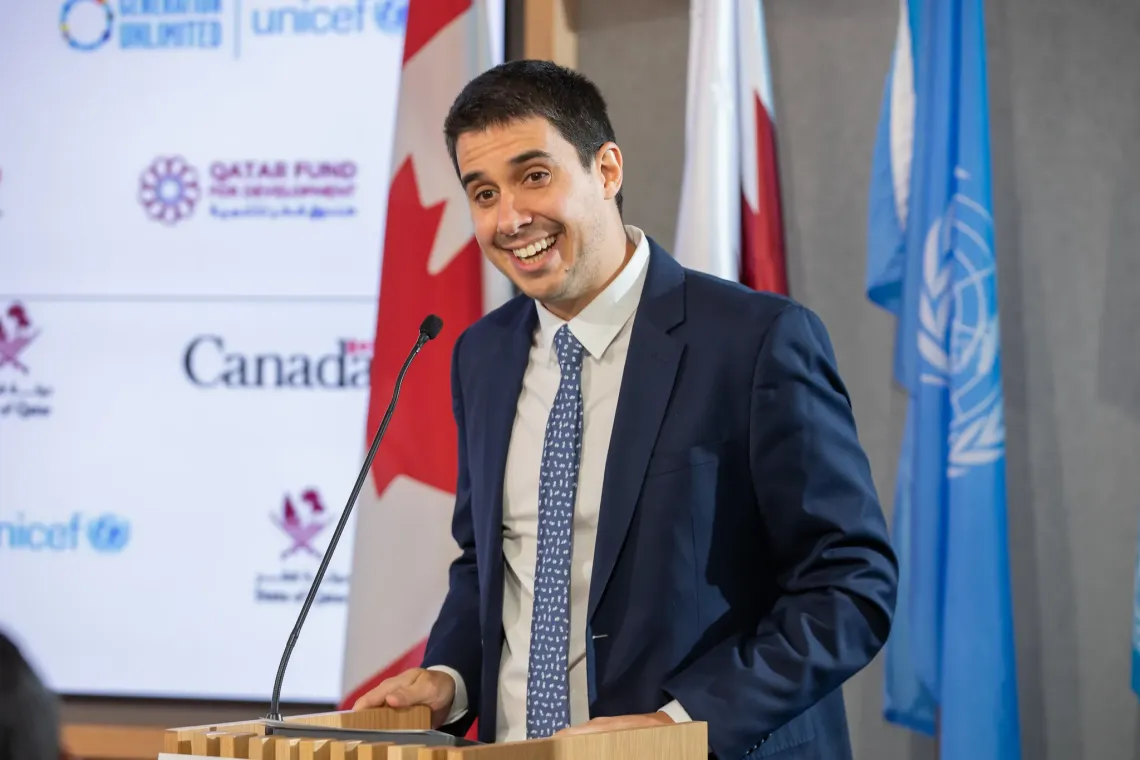
From investment to measurable livelihood outcomes
Across both Spotlight Conversations, a consistent direction emerged. Skills development cannot remain detached from the systems that determine whether young people can earn a sustainable income. Participants highlighted the need to connect training with paid experience and jobs; entrepreneurs with patient and de-risked finance; businesses with markets, customers and supply chains; and major investments with local skills and workforce plans.
These connections also require long-term follow-through. Cindy Termorshuizen, Deputy Minister of International Development at Global Affairs Canada, said the central challenge is to build youth skills and livelihood pathways into investment and economic growth initiatives from the outset. She pointed to Canada’s support for women and young people across sustainable agroforestry and climate-resilient value chains, where skills development is linked to stronger enterprises, greater productivity and access to livelihoods. Canada reaffirmed its commitment to Generation Unlimited and to working with its partners to translate young people’s skills, ideas and ambitions into livelihoods, businesses and jobs.
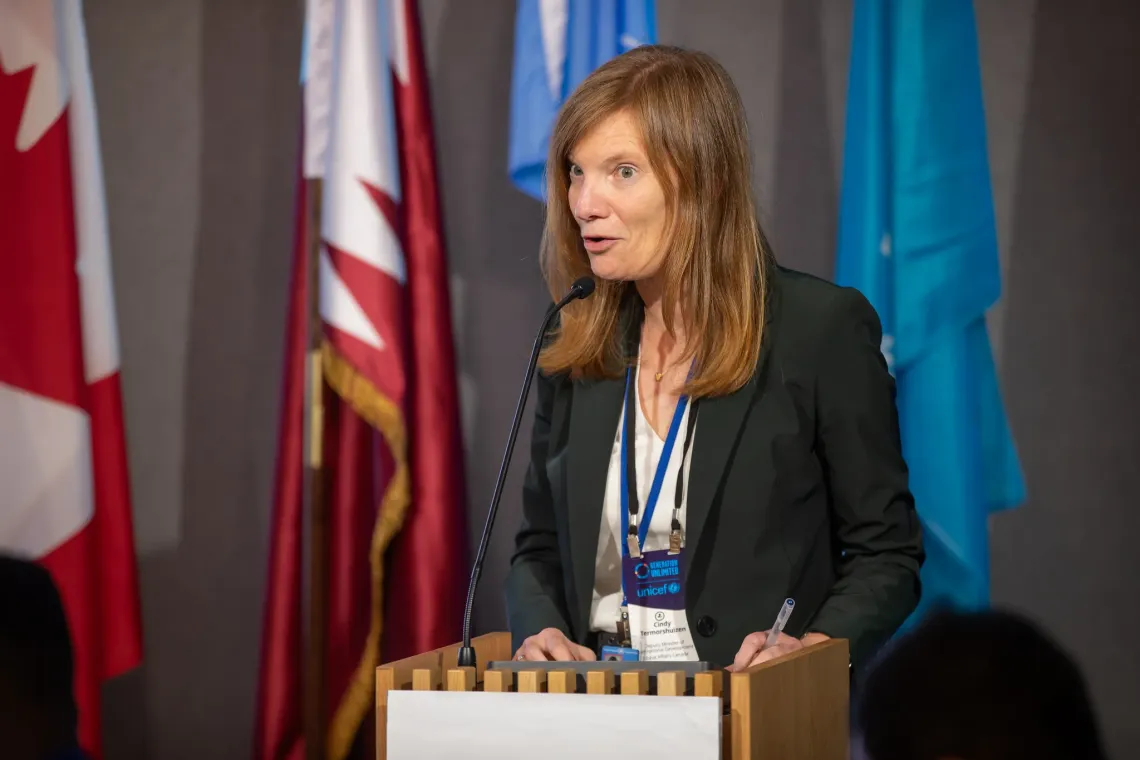
"As we invest in AI, the green economy and other growth sectors, how can we build opportunities for young people into these investments from the very start, through employer commitments, financing, technology, market access or pathways to a first job or a growing business?”
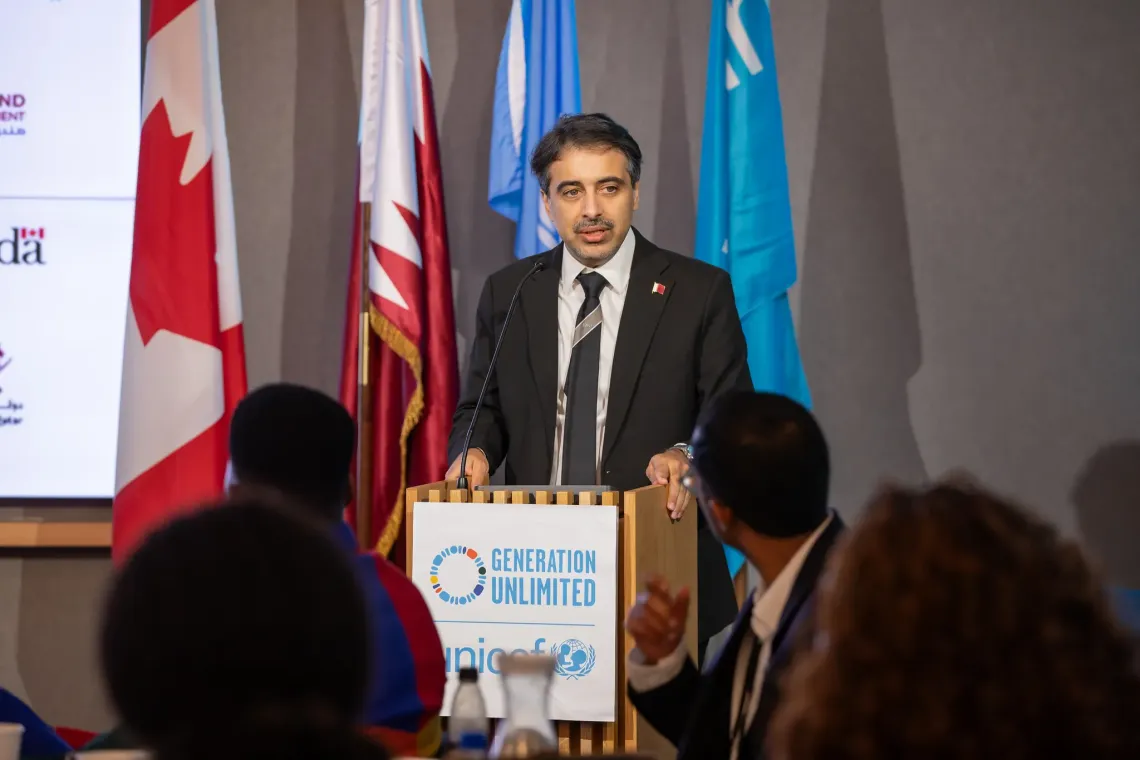
Fahad Al-Sulaiti, Director-General of the Qatar Fund for Development and GenU Board member, said future investment must respond to changing patterns of job creation and strengthen economic ecosystems across Africa, Asia, Latin America and the Middle East.
“Our investment will be going specifically to the private sector. We need to create not only small businesses, but stronger medium-sized and larger private-sector enterprises.”
The meeting also recognized the leaders who helped establish and advance Generation Unlimited through the launch of the Generation Unlimited Legacy Circle. Catherine Russell formally launched the Legacy Circle to recognize GenU’s founding leaders and invited its inaugural members to remain active champions as the partnership enters its next phase.
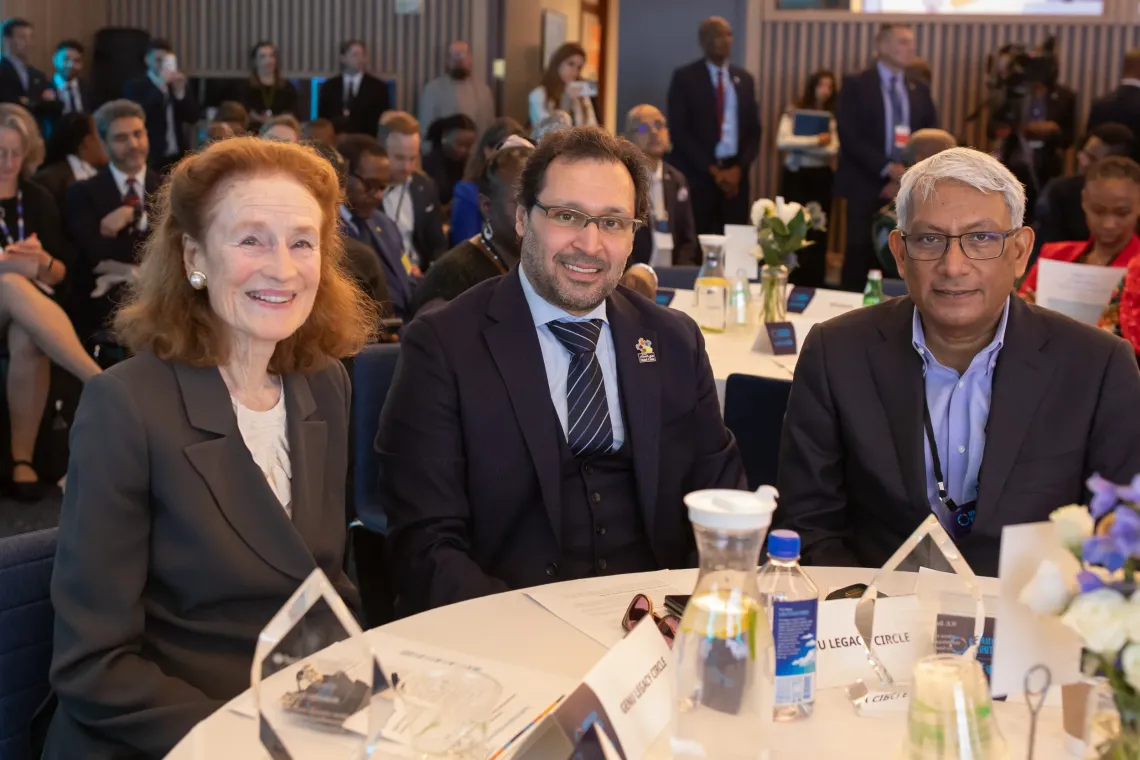
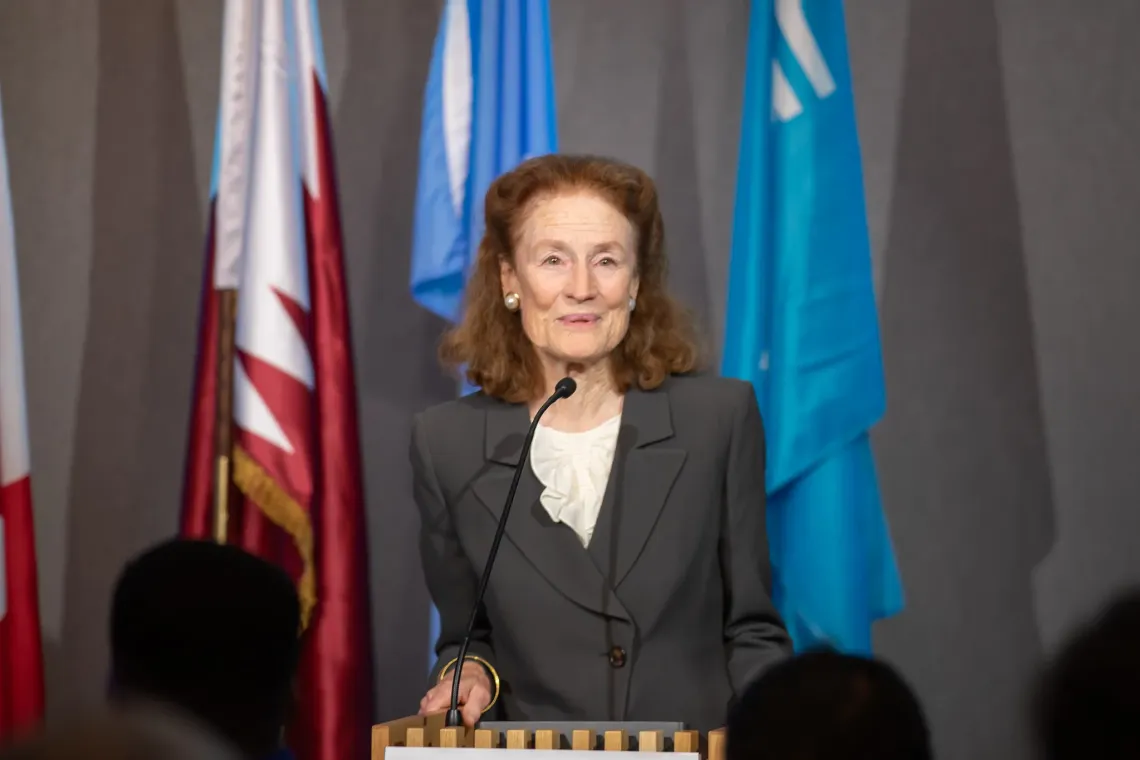
“We want you to carry the flag into the next generation and make sure that you realize that it is your future that you are building (…) carry the flag, and make it a great world for all young people.”
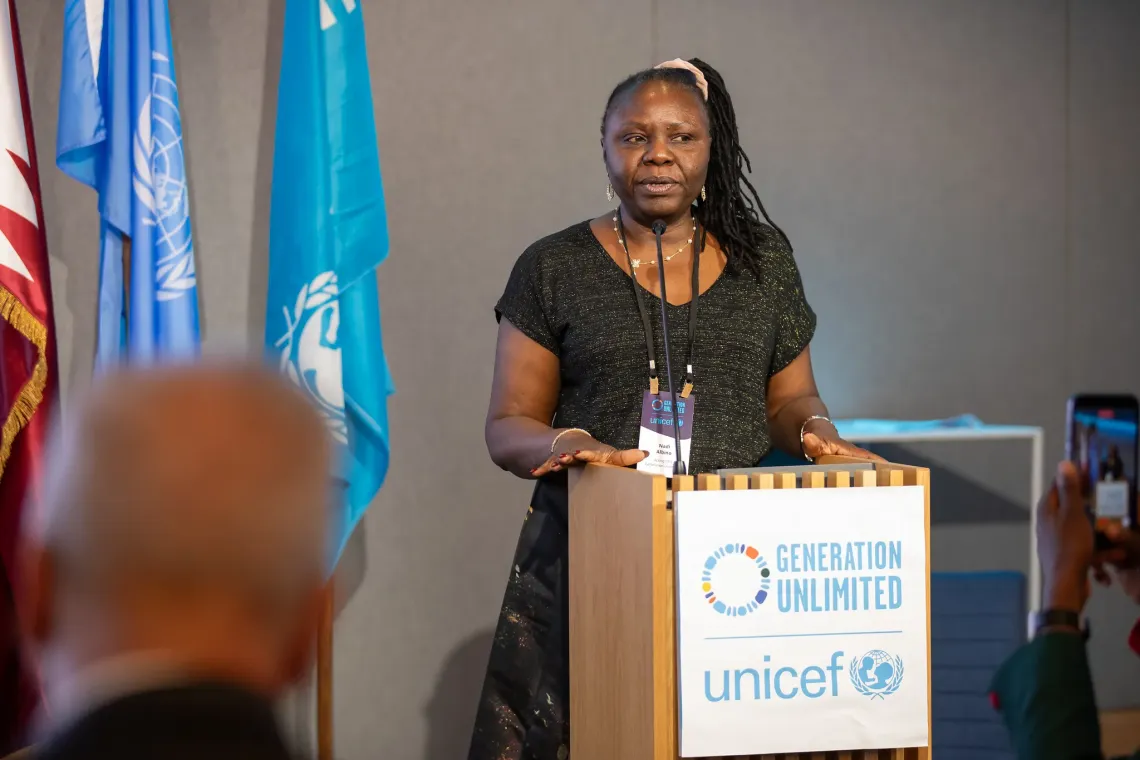
Nadi Albino, Acting CEO of Generation Unlimited, closed by recognizing the people and partners who translate the partnership’s ambition into opportunities for young people. Albino acknowledged that GenU has only begun to address the scale of the challenge, but emphasized that sustained collective action can carry the partnership much further, connecting global leadership with delivery for young people wherever they live.
"We know that there is so much more work to be done, that we have only scratched the surface. But we know that together, we will go very far.”
Master of Ceremonies Wangzhe “Jonathan” Liao, a university journalism student from China, distilled its central challenge: green investment must translate into real livelihoods, and young people must help shape the future of AI rather than simply prepare for it. The Youth Position Statement asks the Council to turn those principles into commitments that can be measured.
The path forward is therefore not defined by a single programme or investment. It depends on governments, businesses, development and financing institutions, and young people joining their capabilities through public-private-youth partnerships.
Generation Unlimited will continue to provide a platform for making those connections, with success measured by whether more young people gain access to decent work, build sustainable businesses, increase their incomes and have a meaningful role in shaping the economies emerging around the world.
From discussion to young entrepreneurs already building solutions
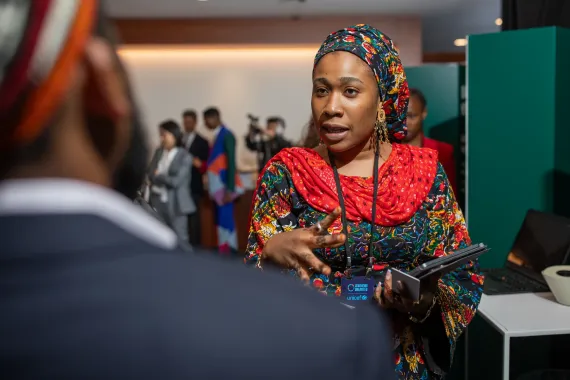
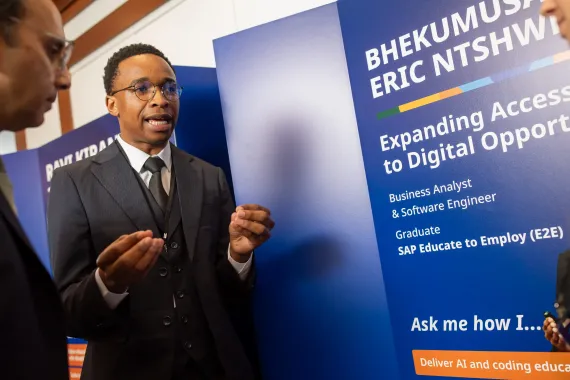
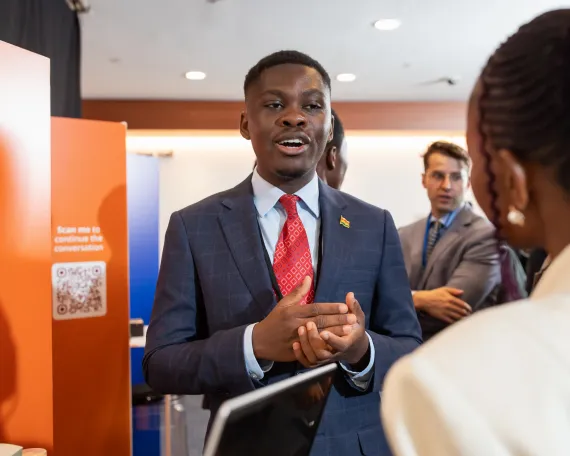
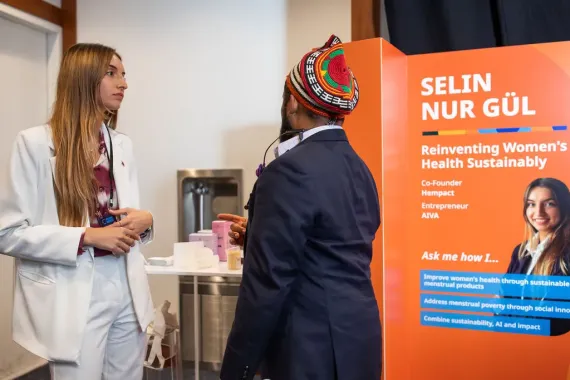
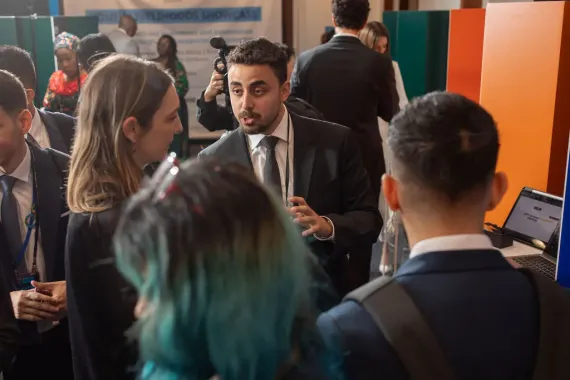
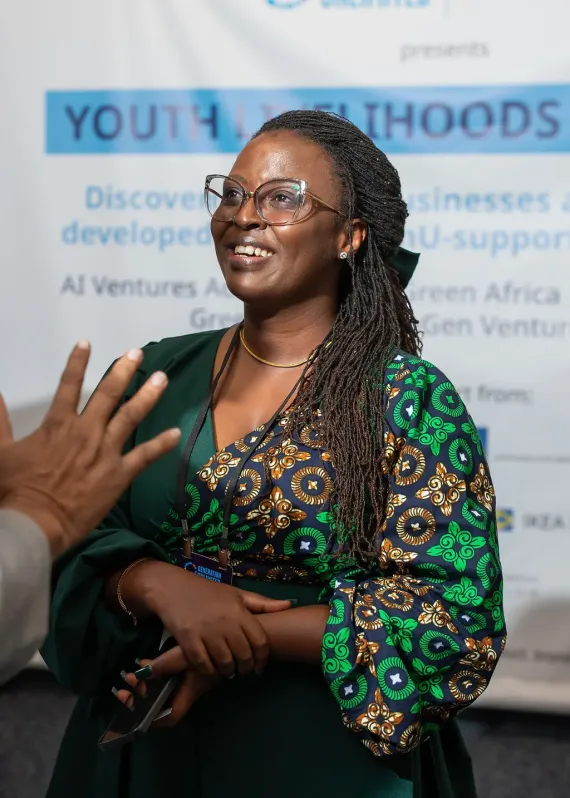
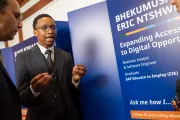
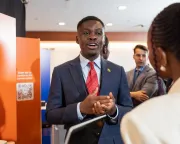
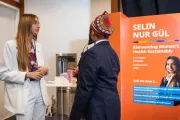
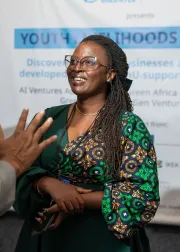
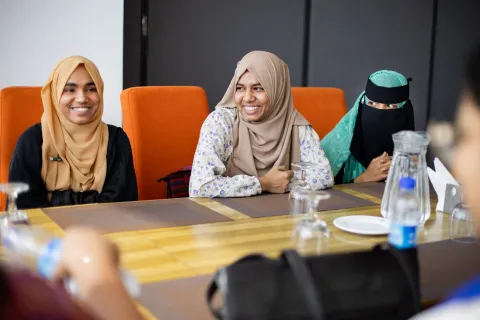
Following the meeting, the Youth Livelihoods Showcase connected Council members and partners with young people already building businesses and applying technology to practical challenges. Founders from across Africa, Asia and the Middle East presented green ventures spanning clean energy, sustainable agriculture, AI-enabled education, assistive technology, renewable-energy infrastructure and health.
Through direct conversations at the booths, government, business and development leaders learned about the entrepreneurs’ solutions, the markets they serve and the barriers to growth. The showcase provided a space to build relationships, identify new opportunities for collaboration and strengthen the public-private-youth partnerships needed to create #WorkLifeReady livelihoods at scale.