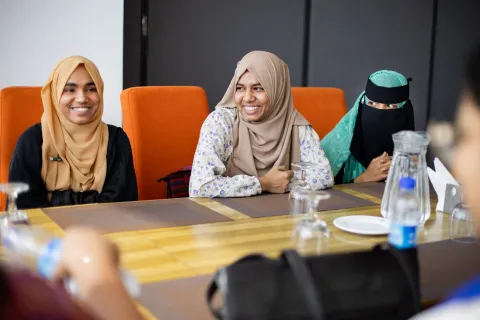

Young women turn AI skills into ventures addressing real-world challenges
Eleven youth-led enterprises showcased solutions spanning health, education, employment, financial inclusion and food systems at the AI Ventures Accelerator Demo Day in Gurugram, India.

A smartphone camera that could help detect childhood eye conditions earlier. Financial data that could open access to credit for people without a formal borrowing history. Solar-powered cold storage that helps food vendors keep produce fresh.
These are some of the solutions young founders presented in Gurugram, India, through the AI Ventures Accelerator (AIVA), a global programme helping young people, particularly women aged 19 to 24, turn practical AI skills into responsible enterprises addressing community needs.
Delivered through a partnership between UNICEF’s Generation Unlimited and Technovation, the 12-week programme brought together more than 1,000 young women from 60 countries to build practical AI, entrepreneurship and business skills. Participants learned how to turn their ideas into viable ventures and gained the capabilities, mentorship and support needed to start and run a business.
More than 200 completed the programme with a working product, a demonstration video and a venture pitch. Collectively, their ventures have already reached more than 25,000 users. Eleven enterprises were selected to present their solutions at the event, each receiving US$10,000 in equity-free seed funding to support the next stage of their development.
The founders are applying AI across a wide range of sectors. The selected ventures span health, education, employment, financial inclusion, food systems and the creative industries, reflecting the range of challenges young founders are working to address.
The ventures show how access to the right skills, guidance and opportunities can enable young women to build their own livelihoods while creating practical solutions for others.
From skills training to working ventures
AIVA is a global venture accelerator supporting young people, particularly young women aged 19 to 24, to build applied AI skills and develop responsible enterprises addressing community needs. The programme combines technical learning, business training, mentorship and pathways to equity-free seed funding.
Participants complete 50 hours of project-based training covering technical foundations, prototyping, user testing, GitHub workflows, entrepreneurship and financial literacy. They also receive support from AI coaches and business mentors as they test their ideas, speak with potential users and strengthen their venture models.
For many of the founders presenting in Gurugram, the programme represented their first experience of writing code, testing a product with users or pitching a business idea. By Demo Day, they had moved beyond classroom exercises to working prototypes built around specific challenges.
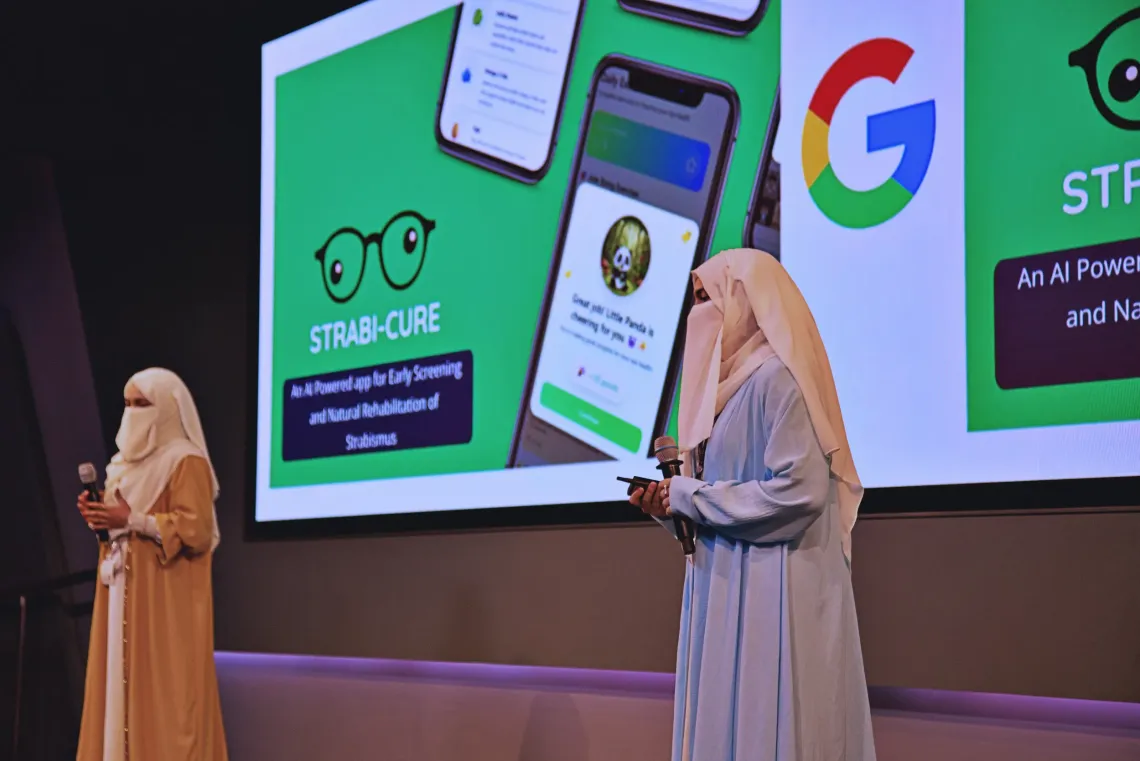
Among them was Strabi-Cure, an India-based venture using a standard smartphone camera to support earlier detection of strabismus in children. The platform combines screening with gamified vision therapy, progress monitoring and doctor-supported care plans. The idea emerged from the founder’s family experience of a delayed diagnosis.
In Rwanda, PACIN is developing an application programming interface that converts mobile-money and other alternative financial data into explainable credit scores. Its aim is to help financial institutions assess small businesses and individuals who may have regular financial activity but no formal credit record.
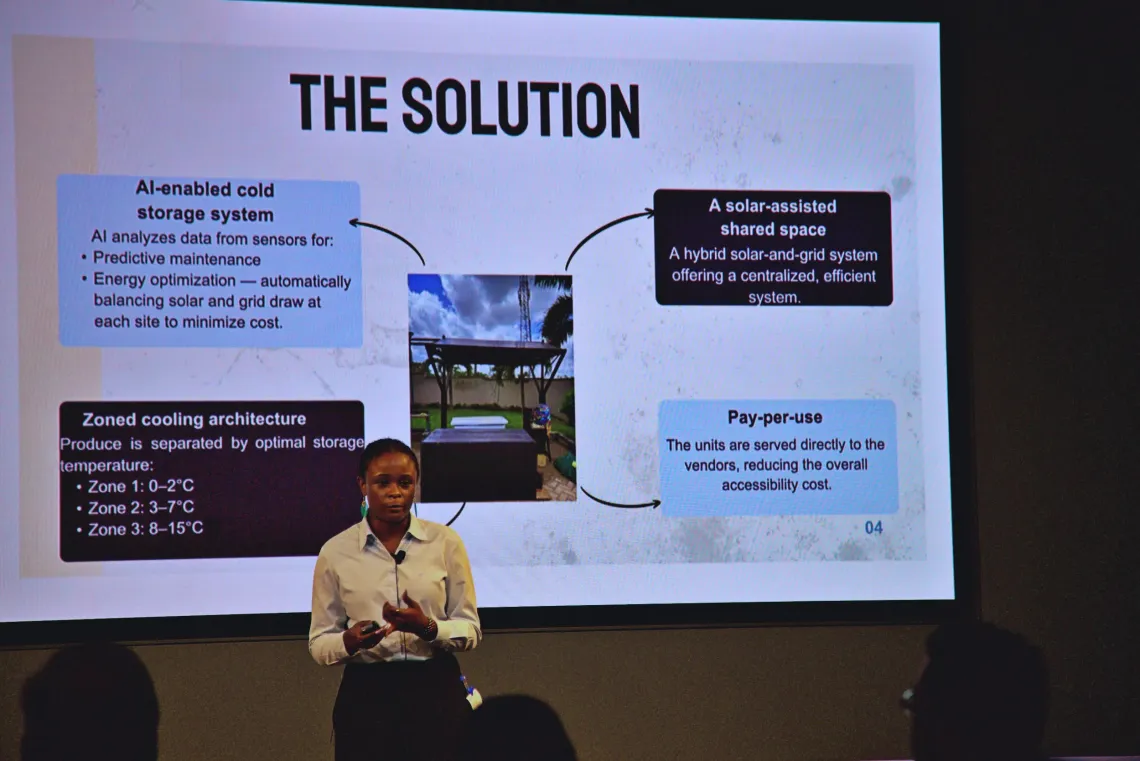
From Kenya, KilimoChills Solution presented modular cold-storage units for small-scale food vendors. The units operate primarily on solar power and allow vendors to pay for storage when they need it, rather than taking on the cost of purchasing or leasing equipment. Sensors monitor temperature performance, while an AI model identifies patterns that may signal potential equipment failure. The team reports that field use has reduced post-harvest loss by more than 80 per cent.
Building responsible AI around people’s needs
Throughout the programme, founders were encouraged to begin with the people they wanted to serve, rather than with the technology itself. That meant testing assumptions with prospective users, considering accessibility and affordability, and building safeguards into how AI-generated recommendations or decisions are presented.
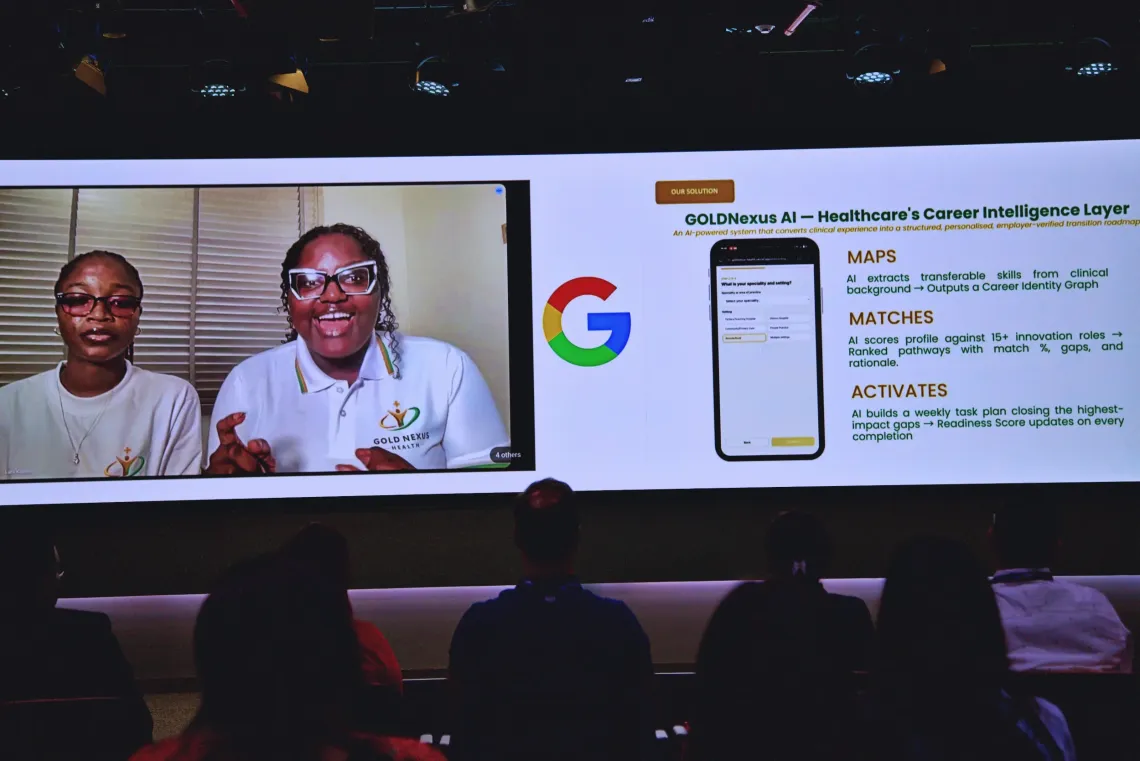
Founders were also encouraged to consider how their products could use AI responsibly. PACIN is designed to give lenders insight into the factors behind its credit scores, while Nigeria-based GOLDNexus Health helps users understand how its career recommendations relate to their existing skills and experience. In both cases, AI supports human decision-making rather than replacing it.
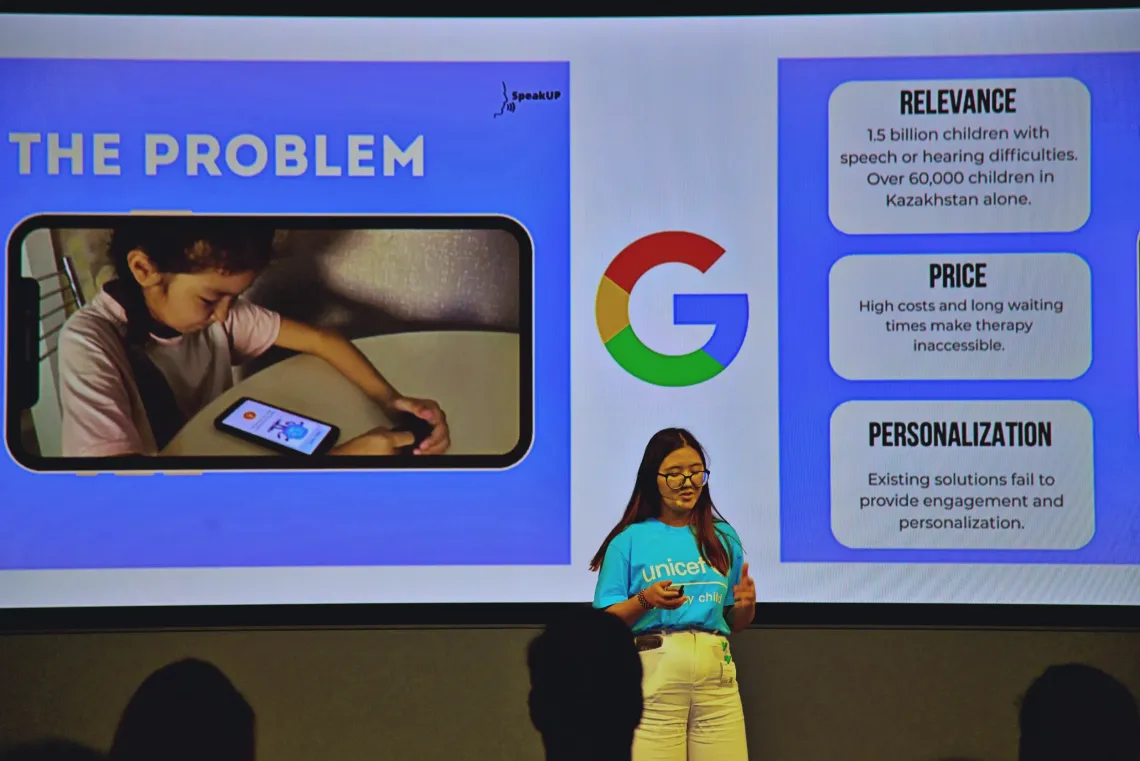
Accessibility also shaped ventures such as SpeakUP, developed in Kazakhstan to support children and adults with speech and communication difficulties. The mobile application recognises unclear speech, converts it into readable text and provides adaptive feedback through game-based exercises. Progress reports allow parents and speech therapists to use the platform alongside professional care. The team reports that more than 500 children have taken part in beta testing, with pilots under way in schools and speech-therapy centres.
Other ventures also included Clari, from Brazil, which helps university students connect their studies with the skills employers need; Glitch Detectives, Nigeria, a reasoning-based mathematics platform that helps students learn by identifying, correcting and explaining errors; Mexico-based CONCORA supports skills-based recruitment across Latin America, while fellow Mexican venture ELLAS Transforman connects women with mentors based on their goals, values and life stage. CR8US Studios Africa, developed in Nigeria, helps African filmmakers use audience and market insights to inform production, distribution and promotion decisions.
Opening the next path
Demo Day gave the founders an opportunity to present their work to potential partners, mentors and investors, receive direct feedback and build relationships that can support the next stage of their ventures.
Some teams are already generating revenue, running pilots or building communities of early users. Others are continuing to refine their technology and validate their business models. Collectively, the ventures report having reached more than 10,000 people, with five already generating revenue.
Their progress also underlines a wider need: young women remain under-represented in AI and entrepreneurship and continue to face barriers to training, mentorship and finance. AIVA seeks to address these gaps through a connected pathway that moves from practical learning to product development, seed funding, incubation and, ultimately, growth.
The solutions presented in Gurugram are still at different stages, and each will require continued testing, partnership and investment. But their founders have already demonstrated what becomes possible when young women are equipped not only to understand AI, but also to decide where and how it can be put to work.
Learn more about the AI Ventures Accelerator.
*UNICEF does not endorse any company, brand, product, or service.